
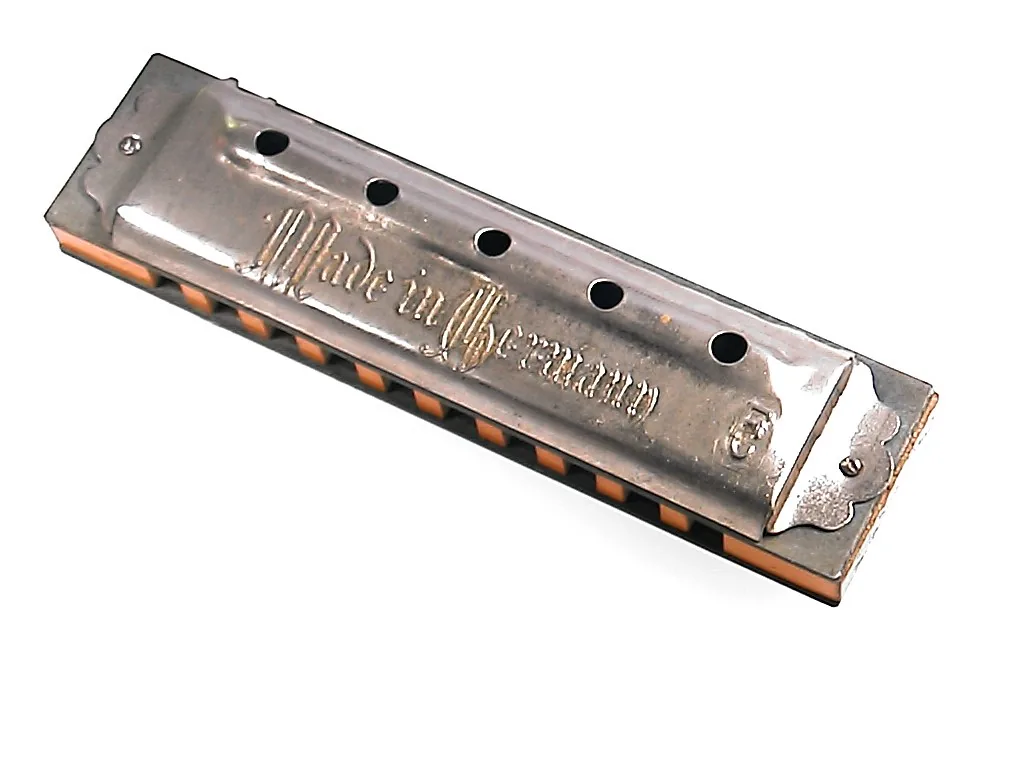
At a glance: The Hohner Chromonica is a chromatic harmonica in the key of C, designed for the stage and recording.
It has 16 holes and 64 brass reeds, providing a wide range and precise response.
Its construction is high quality: stainless steel covers, 1.05 mm brass reed plates and a nickel-plated mouthpiece.
The zigzag slide provides smooth transitions between semitones, from legato to staccato.
Benefits for musicians: consistent feel, clear articulation and balanced sound, ideal for jazz, blues and classical music.
Available in C, it measures approximately 155 mm long and is comfortable to hold.
It is generally in stock at retailers, with possible dispatch within 24 hours and installment payment options.
For a detailed description and purchasing information, see a specialist’s product page.
Hohner Chromonica: a closer look at a classic
With four octaves and a reliable mechanism, this instrument meets the demands of studio and stage work.
Why this model is a benchmark among chromatic harmonicas
Consistent tuning and an even response across its range explain its reputation. The stainless steel covers and 1.05 mm brass reed plates provide remarkable durability and projection.
Who is it for?
Advanced students, classical professionals, jazz improvisers and contemporary blues players can all benefit from it.
The black ABS comb and chrome-plated or nickel-plated mouthpiece with round holes improve comfort during long sessions and reduce fatigue.
Key features at a glance
- 4 octaves for melodies, accompaniment and solos without changing instruments.
- 16 holes and 64 brass reeds for a precise attack and reliable intonation.
- A zigzag slide for instant access to altered notes.
Versions and keys: a focus on C
The C version remains the standard choice for sheet music and recording. This instrument is available from several retailers, with dispatch within 24 hours and secure payment.
Technical specifications and quality materials
Its construction combines durable materials and precise adjustment for an expressive response across its entire range.
Reeds and plates: brass reeds paired with 1.05 mm brass plates respond quickly. They provide stable intonation and a long service life, even with intensive use.
Covers and projection: stainless steel covers provide rigidity and corrosion resistance. They support even projection, useful in the studio and onstage.
Mouthpiece, mechanism and comb
The nickel-plated or chrome-plated brass mouthpiece has round holes and a smooth surface. This improves the air seal and helps the mouthpiece glide during articulation.
The zigzag slide provides reliable access to altered notes. The mechanism reduces air leaks and improves speed in fast passages.
The black ABS comb provides dimensional stability and good hygiene. Some variants have a wooden comb for a more traditional feel.
Range, tuning and care
The instrument has 16 holes and 64 reeds, covering 4 full octaves. Equal temperament ensures compatibility with pianos and ensembles.
| Component | Material | Benefit | Details |
|---|---|---|---|
| Reeds and plates | Brass | Quick response, stable intonation | 1.05 mm plates |
| Covers | Stainless steel | Rigidity and projection | Corrosion resistance |
| Comb | ABS (or wood) | Stability and feel | Approximately 155 mm long |
| Mechanism | Metal alloy | Reliable zigzag slide | Equal temperament |
Performance, comparisons and choosing the right model
Choosing a model depends on its sound, ergonomics and the range needed for your pieces.
Sound: balance and dynamics for controlled projection
The 16-hole model’s signature: balanced registers and gradually building dynamics. Its projection remains controlled, producing a clear mix in the studio or onstage.
The tone stays consistent, making ensemble playing easier. The attack remains precise without sounding harsh.
Quick comparison: the 16-hole model and the 270/48
The 16-hole format offers four full octaves and more freedom for music with a wide range.
The Super Chromonica 270/48, with 48 reeds and a pearwood comb, offers a compact traditional format and a warmer tone.
“The 270/48 remains the historic benchmark for chromatic playing; the 16-hole model opens up possibilities for long pieces and written scores.”
Budget, availability and warranties
Indicative prices: recent offers of around €198 for the 270/48 and the 64 M 280 C. The models are generally in stock, with dispatch within 24 hours.
Some retailers offer a 3-year warranty, secure payment and installment payment options.
| Criterion | 16-hole model | Super Chromonica 270/48 |
|---|---|---|
| Range | 4 octaves (16 holes) | 12-hole format, 48 reeds |
| Comb | ABS (or wood option) | Pearwood (warmer sound) |
| Indicative price | Approximately €198, depending on the offer | Approximately €198 (common offers) |
| Assessment | Suitable for music with a wide range | Average rating of 4.1/5 (15 reviews) |
Try the instrument in a store to assess the slide, ergonomics and response. Compare prices, range, comb material and reviews to make an informed choice.
Conclusion
Conclusion
This model combines a wide range with sturdy construction to meet the needs of demanding musicians.
Key points: 16 holes, 64 brass reeds, 4 octaves, stainless steel covers and 1.05 mm plates provide precision and durability.
The zigzag slide, nickel-plated mouthpiece and equal temperament provide comfort and accurate intonation. Your choice of comb (ABS or wood) will depend on your playing style and preferred maintenance routine.
Compared with the Super Chromonica, it offers a wider range; assess its ergonomics in light of your repertoire. Warranties and availability (dispatch within 24 hours and secure payments) add reassurance when purchasing.
To refine your decision and find out which harmonica to buy, read our guide: which harmonica to buy.