
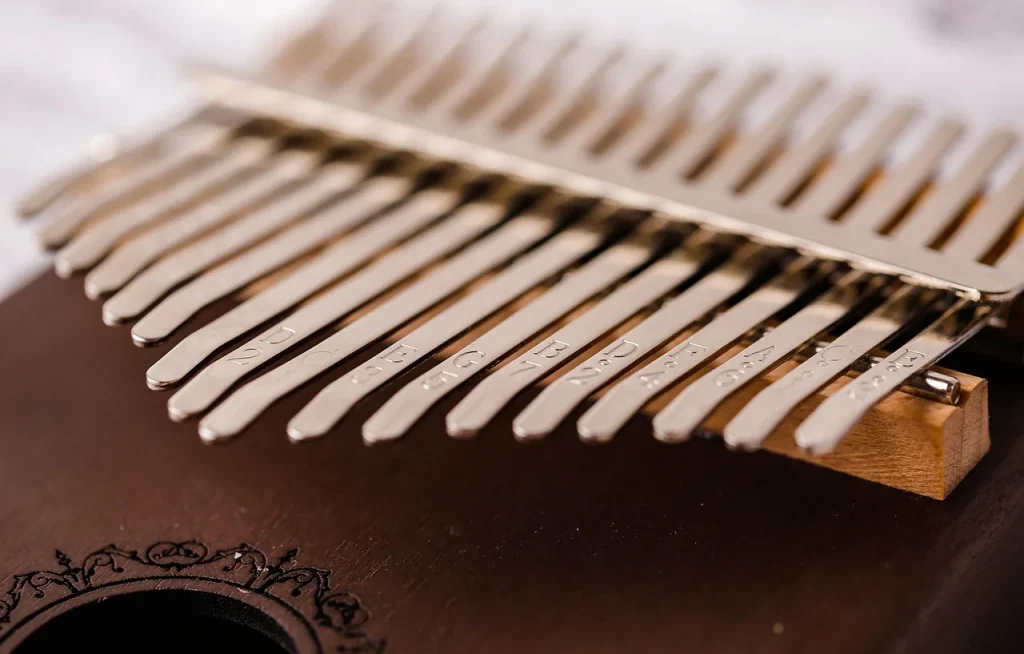
In France in 2025, the kalimba appeals to lovers of gentle sounds. Also called the mbira, sanza or thumb piano, this instrument lends itself to relaxation, covers, composition, early music education and learning.
The standard model has 17 keys. It is easier to get started with for beginners, thanks to its moderate price, lighter weight, accessible range and many tutorials. Its notes are enough to play a wide repertoire.
The extended model adds four tines in the center. It offers a lower range, a richer sound and more possibilities. This model is especially suited to people with musical experience or those seeking a more creative instrument. It is about 5 cm wider, weighs nearly 100 g more and often costs €10 to €20 more.
This guide helps you compare size, comfort, price, number of notes and available resources. To make an informed purchase, see this comparison of the two sizes as well.
21-Tine Kalimba: Benefits, Tuning and Choosing a Model
The extended model meets the needs of musicians who want to enrich their playing. Each key produces a unique note: one key therefore corresponds to one note. This simple principle explains the move from 17 to 21 notes.
Who is the extended model for?
This thumb piano is especially suited to people who already have some experience. It offers more ways to accompany a voice, create chords or vary a melody. Beginners can use it too, provided they have clear guidance.
What each tine adds to the range
The four added tines are often placed in the center. Because they are longer, they vibrate more slowly and produce lower notes with deeper resonance.
The main differences from the standard model
Both versions can play many songs. The extended version does not, however, create four separate melodies. It widens the available range, making richer accompaniment easier.
The very short tines at the ends do not vibrate as easily. Adding high notes there would therefore offer limited benefit. Quality also depends on the sound box, tuning accuracy and comfort under the thumbs.
Which kalimba should you choose for your skill level and intended use?
The right instrument depends mainly on your skill level, hand size and plans. Buying one to play a few covers calls for a different choice from buying one for composition.
The best model for beginners and learning
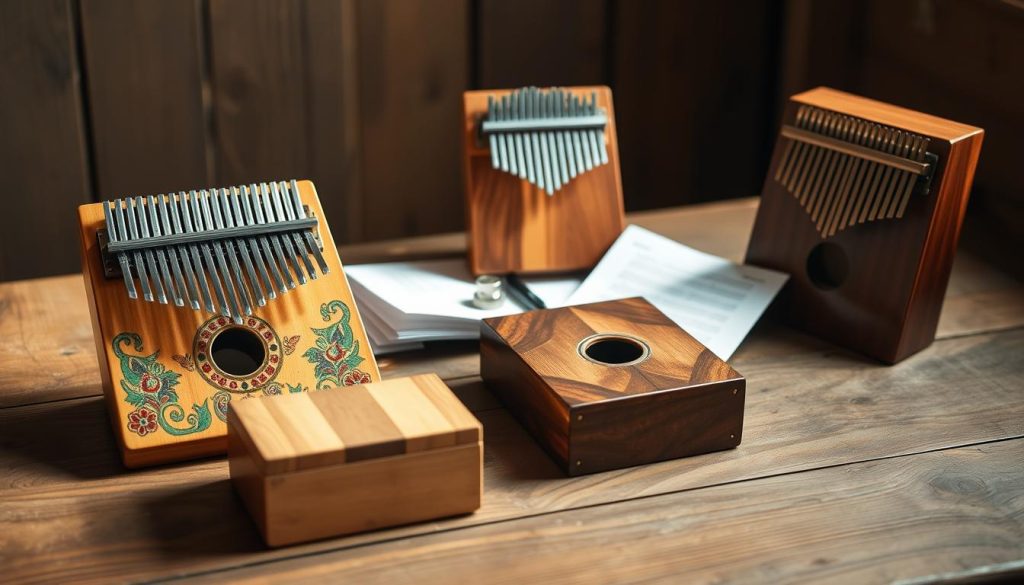
The 17-key model remains the most common in France. It is easier to navigate thanks to the many scores, videos and tutorials available. Beginners can therefore progress faster and make fewer mistakes. To discover the thumb piano, this model offers a reassuring starting point.
The choice for musicians, composers and arrangers
After gaining some musical experience, a 21-key model may be a good choice. The four low tines better support chords, bass lines and personal arrangements. This option suits musicians familiar with the piano, music theory or another instrument.
- Need resources that are easy to use: 17 keys.
- Compose regularly: a wider model.
- Early music education: 5, 9 or 10 keys.
| Player | Recommended model | Goal |
|---|---|---|
| Beginners | 17 keys | Learn easily |
| Experienced musicians | 21 keys | Create arrangements |
| Children | 5 to 10 keys | Discover musical notes |
Notes, scale and tonal depth of the extended-tine kalimba
The central layout reveals an important difference: the four added notes mainly strengthen the lower register. On this instrument, tine length directly affects pitch. A longer tine vibrates more slowly and therefore produces a lower frequency.
The very short tines at the ends vibrate less. Their notes can sound faint, especially alongside the central notes. This arrangement explains why the tine kalimba favors useful low notes over additional high ones.
Why the additional notes are lower
The scale thus extends into a deeper range. A low note can mark a strong beat, support a melody or double it an octave below. The central keys then provide a stable foundation without overpowering the main theme.
A wider range for arrangements
This wider range suits ballads such as Ballade pour Adeline, as well as film music. Arrangements gain depth and gentle resonance. A light touch, precise tuning and attentive listening preserve the clarity of each note.
Tuning, keys and reading tablature
To read tablature confidently, start by identifying each key. Letter notation matches do with C, ré with D, mi with E, fa with F, sol with G, la with A and si with B. The numbered NMCA method replaces these letters with the digits 1 to 7. This reference makes learning more straightforward.

Recognizing notes, octaves and markings
A dot below a number indicates the same note one octave lower. A dot above indicates an octave higher. These marks help prevent mistakes in register while playing. Apply the stickers starting with the central key, then work outward, alternating left and right. Check each marking with a digital chromatic tuner.
Adapting a score written for another model
All the notes on a 17-key model are present on the extended version. Tablature written for 17 tines is therefore generally compatible. Simply adjust where you look for the notes before creating your arrangements. To tune a scale in C or F, use a small hammer and make gradual adjustments. Some experience helps when correcting each note. This guide to diatonic instruments provides useful additional context.
Sound box, materials and sound quality
Material influences the sound, but construction remains decisive. A good sound box brings out each note, sustains it longer and improves projection. To refine your choice, consult this complete thumb piano guide.
Hollow body or solid wood: how do they sound?
A hollow body often increases volume, resonance and acoustic projection. The mahogany Gecko 17 illustrates this rich, clear and bright sound. Solid wood, by contrast, gives a softer, steadier response with less projection indoors.
The LT-K21W 21 in solid black walnut offers a firm feel and a velvety tone. A larger sound box is better suited to group listening, while a solid body offers more control.
Mahogany, koa, walnut or acrylic: the differences
- Mahogany: warmth, brightness and projection.
- Koa: depth, softness and pleasing resonance.
- Black walnut: a pure, velvety and precise sound.
- Acrylic: a crystalline tone, often with greater weight.
The koa and mahogany Moozica 17 combines warmth and brilliance. Tine quality, machining, tuning precision and key comfort matter more than the advertised material. Compare sound, range, price and finish before buying.
Ergonomics, width and everyday playing comfort
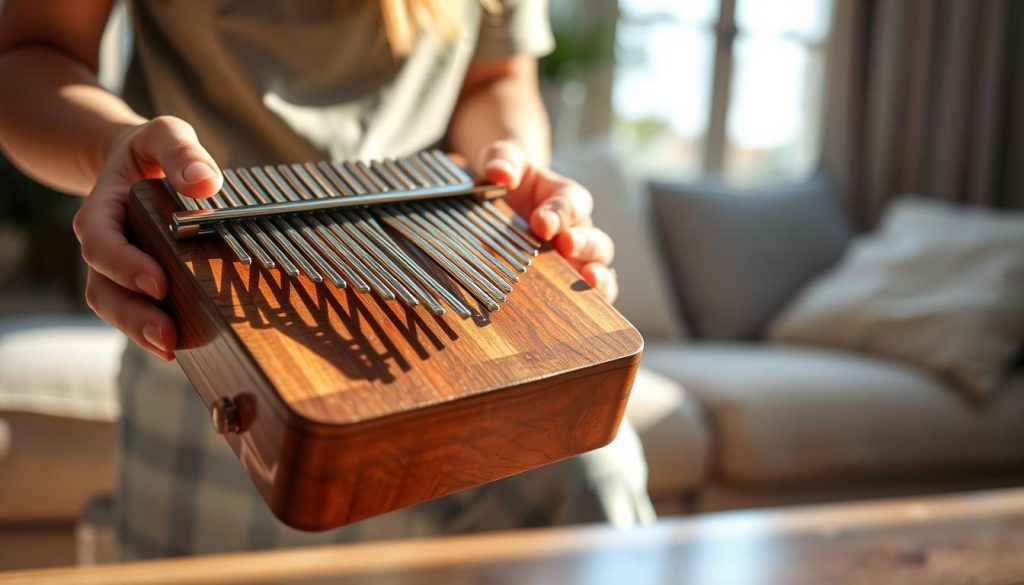
How an instrument feels in your hands quickly affects the pleasure of playing. A 21-tine kalimba is often 5 cm wider than a standard model. This extra width provides more room, especially for larger hands.
Key spacing and thumb precision
A hollow sound box often has well-spaced keys. It suits wider fingers and gives clearer access to each note. A solid body often has keys closer together. This layout makes simultaneous chords and quick sweeps easier.
Before buying, test the width, edges and response of the tines. Good workmanship should allow precise movement without excessive pressure on your thumbs. A brief trial in a shop quickly reveals how comfortable it really is.
Weight, grip and fatigue during long sessions
The extra 100 g of an extended model may seem insignificant. After several dozen minutes, however, it can tire your wrists, forearms and hands. To stay comfortable, sit up straight, rest the instrument on your thigh and relax your shoulders.
- Take a break every twenty minutes.
- Rest the instrument lightly on your thigh.
- Stop playing as soon as you feel tension.
| Feature | Hollow sound box | Solid body |
|---|---|---|
| Spacing | Keys farther apart | Keys closer together |
| Comfort | Suits wider fingers | Convenient for chords |
| Sound projection | Often fuller resonance | More controlled response |
Price, build quality and essential accessories
Before comparing offers, set a realistic budget. In France, a 21-tine model often costs €10 to €20 more than a comparable 17-tine version. Price also varies with the type of wood, construction, finish quality and included accessories.
What should you budget for a reliable instrument?
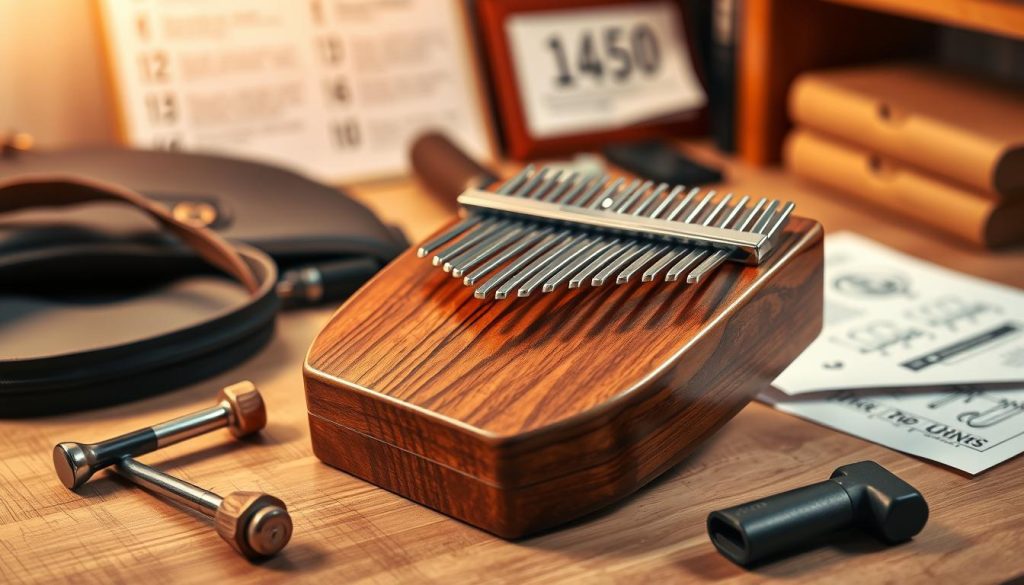
A reliable instrument has a consistent tone, good resonance and stable tuning. Price alone is therefore not enough to judge a purchase. A mahogany Gecko 17 with a shock-resistant case can offer a solid starting point. The solid black walnut LT-K21W 21, meanwhile, offers a complete set.
What to check before buying
Check that the keys are straight, the tines are securely fitted and the body is well finished. Every note should sound without unwanted noise. Test the width too, so your thumbs can remain in a comfortable position.
- Case: essential protection during transport.
- Hammer: useful for tuning every two to four weeks.
- Stickers, cloth and stand: practical everyday accessories.
An excellent, well-made 17-key model is better than a wider, low-quality instrument. To explore this complete guide further, compare actual quality, comfort and tonal consistency above all.
More compact, wider or chromatic models: what are the alternatives?
To broaden your search, first consider the number of keys. Small kalimbas with 5, 9 or 10 keys are light instruments for early music education. Their compact bodies suit children, travel and first musical discoveries.
This portable option has a limited range, however. Fewer tines restrict bass notes, developed chords and repertoire. It is therefore better for travel than sustained learning.
Versions with 24, 34 or 42 keys offer a wider palette. Their more numerous tines are often chromatic. They require precise tuning, good music-reading skills and a larger budget. Check key quality, weight, price and how easy the notes are to locate before moving beyond the common models.
| Player | Recommended model | Use |
|---|---|---|
| Child | 5 to 10 keys | Early music education |
| Traveler | 9 to 10 keys | Portable playing |
| Adult beginner | 17 keys | Learning |
| Advanced arranger | 24 to 42 keys | Chromatic composition |
To compare instruments for your budget, consult this guide to the best kalimbas.
Conclusion
For beginners, the 17-key kalimba remains the simplest choice. Tutorials, tablature and markings make learning easier. A mahogany instrument with a hollow sound box offers a gentle tone. A tuning hammer, stickers and an instruction booklet make playing more straightforward. This guide supports learning the thumb piano.
After some musical experience, the 21-tine model becomes a good choice. Four low notes enrich its scale, arrangements, octaves and range. Each note gains presence without weighing down the melody. This wider instrument does, however, require a comfortable grip. Check its weight, quality, resonance, the tuning of each tine and its comfort. Chromatic models with 24 to 42 tines are intended for advanced musicians.
Your choice depends on how you will use the instrument, your skill level, budget and goals: relaxation, covers or composition. Compare the differences of 5 cm, 100 g and €10 to €20, along with the accessories and ease of playing, before choosing the right model.