
Buying a piano is an important step for any musician, whether beginner or experienced. Choosing the right instrument takes thought: it is a long-term investment that will accompany you throughout your musical journey. To help you find your ideal piano, we have identified five essential factors to consider before making your decision.
From sound and action to space and budget, every aspect matters if your future piano is to meet your expectations and needs. An informed choice will help you progress and enjoy playing for years to come.
A well-chosen piano is an instrument you will enjoy playing every day. It becomes a faithful companion and an extension of your artistic expression. Let’s look at how to make a choice that will satisfy you for years to come.
Choose the Type of Piano That Suits Your Playing
First, decide which type of piano best suits your surroundings and musical ambitions. The traditional distinction between acoustic and digital pianos now includes many innovations that offer appealing combinations. There are several categories, each with its own characteristics.
Today, acoustic pianos are available with systems that let you play through headphones. They combine the experience of a traditional instrument with the quieter operation of a digital piano. This development reflects manufacturers’ efforts to accommodate modern constraints, such as apartment living or the need to play at any hour without disturbing others. To distinguish essential features from those that would simply be nice to have, examine the available options.
Acoustic Upright Piano
This is the most common type of acoustic piano. It is valued for its authentic sound and mechanical touch. Uprights come in different sizes, which affect the richness of their sound and the depth of their bass. A quality upright piano offers the resonance and dynamics many pianists seek.
Acoustic Grand Piano
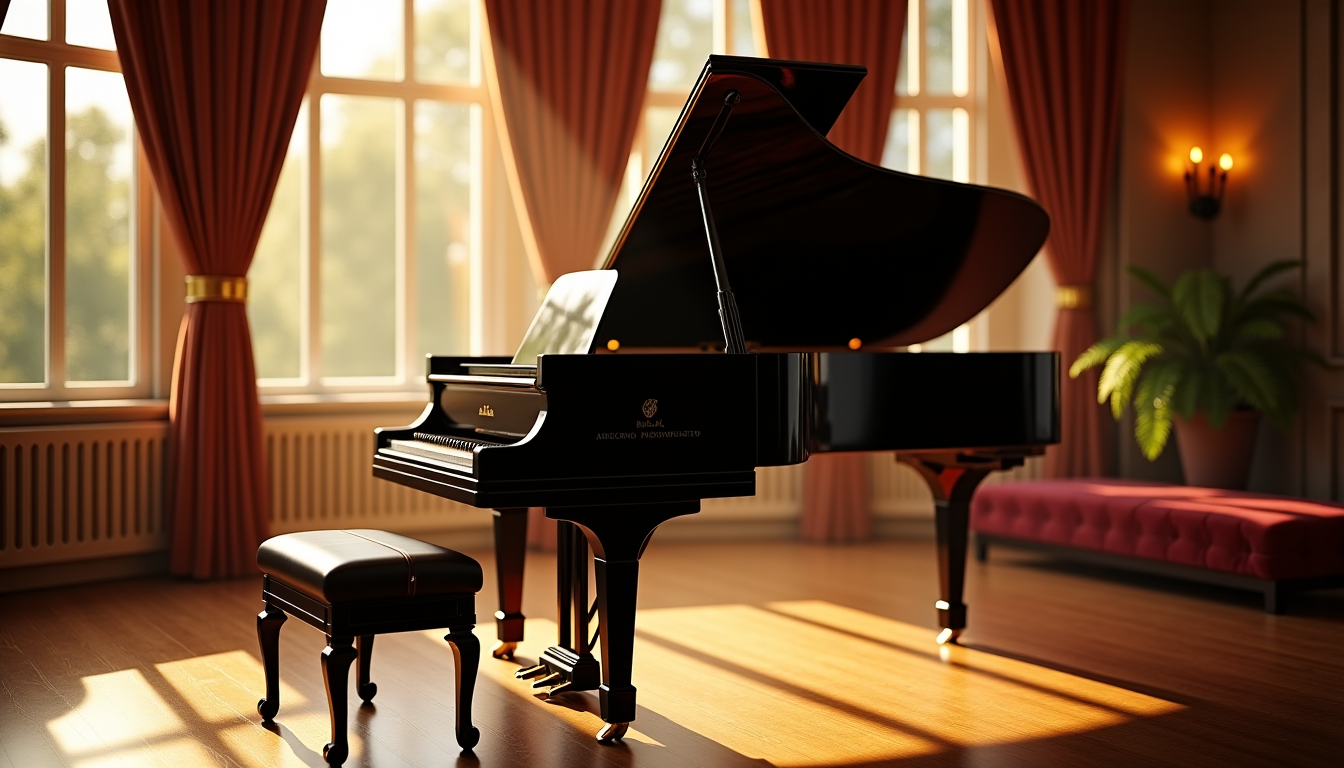
The grand piano represents the pinnacle of acoustic pianos. With its horizontal strings and larger soundboard, it produces exceptionally rich and powerful sound. Its action is often more responsive and nuanced. It suits large spaces and demanding pianists.
Digital Piano
These instruments reproduce the sound of an acoustic piano using digital samples and simulate the feel of a mechanical keyboard. They offer many benefits: adjustable volume, a headphone output, a range of sounds (organ, strings, and more), a built-in metronome, and often recording functions. They are compact, require no tuning, and are generally more affordable.
Hybrid Piano
Hybrid pianos aim to combine the advantages of acoustic and digital instruments. Some incorporate an acoustic piano action and a digital sound generator, allowing you to play in silent mode. Others closely reproduce the touch of a grand piano while remaining digital. They offer an excellent compromise for those who want the feel of an acoustic piano and the features of a digital one.
Stage Piano (Controller Keyboard)
Designed for the stage, these instruments are portable and robust. They offer a wide range of sounds and features, but their touch is often less like that of an acoustic piano than the touch of stationary digital pianos. They suit musicians who travel frequently or need considerable versatility in sound.
Here is an overview of the main characteristics to help you narrow your choice:
| Type of piano | Advantages | Points to consider |
|---|---|---|
| Acoustic (upright or grand) | Authentic sound, expressive mechanical touch, artistic value | Space requirements, weight, regular tuning, sensitivity to changes in climate |
| Digital | Adjustable volume, headphones, varied sounds, no tuning required, some models are portable | Less natural touch for some players, requires electricity |
| Hybrid | Balance of touch and sound, silent mode, digital features | Potentially higher cost than standard digital pianos |
| Stage | Portability, durability, versatile sounds for live performance | Touch can be less realistic for classical practice |
Set a Realistic Budget and Plan for Additional Costs
Price is a deciding factor when buying a piano, so it is essential to set a realistic budget from the outset. Prices vary considerably according to the instrument’s type, age, brand, and condition. An entry-level digital piano may be affordable, while a new grand piano requires a substantial investment.
Plan for costs beyond the purchase price. For an acoustic piano, these include transport, which can be complicated and expensive, regular tuning at least once or twice a year, and possible repairs or restoration. A digital piano does not need tuning, but you may need to buy accessories such as good headphones, a suitable bench, or a quality sustain pedal.
Take particular care when buying a used piano. An attractive price can conceal serious faults or the need for costly restoration. That is why a professional assessment is valuable, as we will see later. The cost of an inspection could save you much greater expense down the line. Remember that the “best piano” is, above all, one you can access and enjoy playing, even if it is not the most expensive model.
Consider Your Space and How You Will Use the Piano
Where you place your piano and how you use it will strongly influence your choice. Whether you are a beginner or an experienced musician, or plan to take lessons at home, an instrument that suits your surroundings is essential to your progress and daily enjoyment.
For a beginner, easy access to a quality instrument is crucial. Having a piano at home makes regular practice possible, and regular practice is the key to learning. If space is limited, a compact digital piano or a small upright will be more suitable. Noise also matters, especially in an apartment: the headphone feature of a digital or hybrid piano may be essential.
More advanced pianists may want greater resonance and a more responsive touch, making a better-quality acoustic piano worth the investment. Whether you play classical music, jazz, or contemporary music, each style may benefit from an instrument with particular characteristics. What matters most is choosing a quality instrument suited to your playing and goals. Renting can be a useful way to start before buying.
Here are some factors to assess according to your space and intended use:
- Available space: Measure the area where you plan to put the piano. A grand piano requires much more room than a digital or upright piano.
- Sound insulation: If you live in an apartment or a shared building, a digital piano with a headphone output or an acoustic piano equipped with a silent system can be an excellent solution.
- Humidity and temperature: Acoustic pianos are sensitive to changes in climate. A stable environment is essential to their longevity and ability to stay in tune.
- Player’s level: A beginner will not have the same requirements as a concert pianist. An instrument that is too complex or too basic could hinder progress.
- How often you play: If you play for several hours a day, a sturdy, comfortable instrument will be a major advantage.
- Musical goals: Do you want to play for pleasure, take lessons, or perform in public? Each goal influences your choice of instrument.
Ask a Technician to Assess the Piano
If you are considering buying a used piano, whether from a private seller or a professional, an expert opinion is valuable. A specialist technician can inspect the instrument thoroughly and give you an objective assessment of its overall condition. This often-overlooked step can help you avoid unpleasant surprises and protect your investment.
The cost of a technician’s visit, generally less than one hundred euros depending on the distance, is modest compared with the price of a piano and any potential repair costs. A professional can spot hidden problems, assess wear on components (the action, soundboard, bridges, strings, and tuning pins), and estimate the instrument’s true value. They can also confirm whether the asking price is fair or advise against buying if restoration would be too costly.
An experienced technician can also shed light on the piano’s history, any repairs it has undergone, and how well it has been maintained. Their advice is valuable for finding the piano that suits you with a clear understanding of what you are buying. Do not underestimate this outside expertise: it can help you make a successful purchase.
“The best piano is the one you have access to. After all, any piano, even the cheapest one or the one sitting at your parents’ house, is better than no piano at all!”
Try the Instrument: Touch and Sound
The most important advice before buying a piano is probably the simplest: play every piano you are considering! Do more than test a few keys or check that every part works. Sit down comfortably and play your favorite pieces. That is the best way to get a feel for the instrument and find out whether it suits you.
The feel of the keyboard is fundamental. Every piano has its own personality: key resistance, key travel, and responsiveness vary from one instrument to another. A good touch allows great expressiveness and makes it easier to learn to play with nuance. On an acoustic piano, check that every key works properly, feels neither too stiff nor too soft, and returns smoothly. On a digital piano, assess how well it simulates the action and the weight of the keys.
Sound is the other pillar of the piano-playing experience. Listen carefully to the richness of the harmonics, how long notes resonate, the clarity of each note, and the balance between the low, middle, and high registers. A good piano should have a consistent sound across the keyboard. Play soft and loud passages to assess its dynamic range. On a digital piano, try the different available sounds and make sure the speakers reproduce them faithfully.
Remember to test the pedals too. The sustain pedal (on the right) should work smoothly and extend the sound pleasantly. The soft pedal (on the left) and the sostenuto pedal (in the center, if present) should also be responsive. A thorough trial will help you imagine playing the instrument regularly and confirm whether it suits you. This judgment is personal and subjective, but it matters greatly to your long-term satisfaction.
Your Musical Companion: A Choice for the Future
Buying a piano is a decision that will affect you for many years. By carefully considering the type of instrument, your budget, your surroundings, and how you intend to use it, then seeking an expert opinion if needed, you give yourself the best chance of making the right choice. Remember to try it yourself: its touch and sound create unique sensations that you need to enjoy.
A piano is more than a piece of furniture: it is a creative partner, a learning tool, and an endless source of enjoyment. Take time to explore your options, ask questions, and compare instruments. Your future piano is waiting, ready to accompany every stage of your musical journey.