
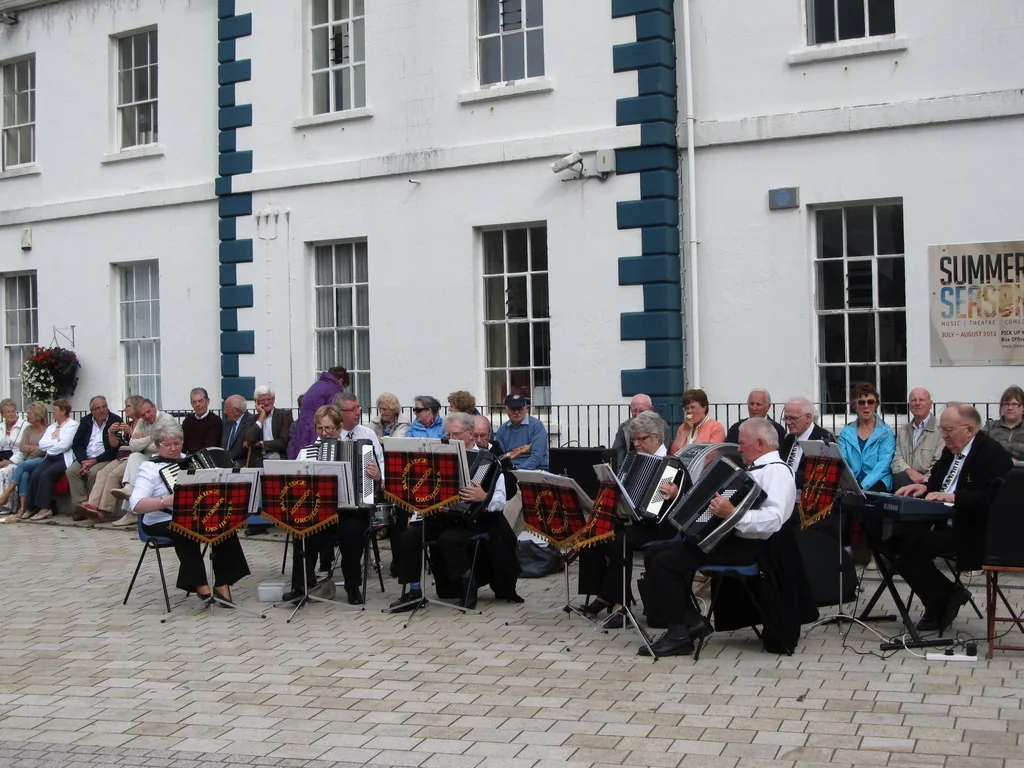
For a long time, classical music and world music were seen as two separate worlds. On one side were the great works of European composers, symphony orchestras, conservatories, and meticulously written scores. On the other were musical traditions from Africa, Asia, Latin America, and the Middle East, passed down orally and rooted in rituals, celebrations, and strong cultural identities.
Yet, on closer inspection, these two worlds have a great deal in common. They share the same purpose: to tell stories, stir emotions, preserve memories, and bring people together. Today, the boundary between classical music and world music is becoming increasingly blurred. Collaborations are growing, influences are mingling, and listeners are opening themselves to new sounds beyond familiar labels.
Two rich traditions, two ways of expressing emotion
Classical music is often associated with technical excellence and harmonic complexity. From the Baroque to the Romantic era and on to contemporary music, it relies on written notation and a high level of performance skill. The same piece can be played with subtle variations depending on the orchestra, conductor, and soloist. This richness of interpretation is part of its beauty.
World music, meanwhile, encompasses immense diversity. It includes very different traditions: African percussion, Berber singing, Indonesian gamelan, Spanish flamenco, Indian music, and Andean music. While classical music often follows a formal structure, world music sometimes favors improvisation, hypnotic repetition, or complex rhythms built around cycles.
But these differences do not put the traditions at odds; they complement each other. In both cases, the aim is the same: to evoke emotion, create an atmosphere, and accompany a story.
When classical music draws inspiration from the world
Contrary to popular belief, classical music has never been entirely closed off from outside influences. Many composers have been fascinated by sounds from other parts of the world.
Examples include:
- Debussy, influenced by Asian music and gamelan
- Ravel, inspired by Spain and certain Eastern musical colors
- Saint-Saëns, whose works sometimes evoke North Africa
- Bartók, who collected and incorporated traditional music from Eastern Europe
These influences enriched orchestration, introduced new musical scales, and opened classical music to other sounds. This cultural dialogue helped modernize European music.
World music and the search for new stages
De son côté, la musique du monde s’est également transformée. Si elle reste souvent liée aux traditions, elle s’inscrit aujourd’hui dans des formes plus contemporaines. Beaucoup d’artistes intègrent des instruments classiques, des arrangements orchestraux ou des harmonies occidentales.
For example, we hear:
- violins in modern Middle Eastern music
- string ensembles accompanying traditional songs
- African percussion fused with jazz or electronic music
- traditional flutes woven into compositions reminiscent of film scores
This evolution does not betray these traditions; it keeps them alive. World music traditions are not frozen in time. They evolve, travel abroad, blend with other styles, and find international audiences.
A natural meeting: fusion and collaboration
Today, collaborations between classical musicians and musicians from world music traditions are increasingly common. Orchestras perform with traditional artists, contemporary composers create hybrid works, and some festivals deliberately place the two worlds side by side.
There are several reasons for this:
- audiences seek more varied musical experiences
- musicians want to explore new sounds
- globalization makes artistic exchange easier
- social media introduces people to different instruments and cultures
This blend appeals to listeners because it creates something unique: the precision and emotional power of classical music combined with the rhythmic richness and authenticity of traditional music.
Conclusion
Classical music and world music are not opposites; they speak to each other. One has shaped the history of Western music, while the other reflects humanity’s cultural diversity. Both share the power to endure through time, convey universal emotions, and connect people.
Today, their dialogue is more vibrant than ever. That may be what makes this meeting so compelling: it opens up new sonic horizons while remaining true to its roots.