
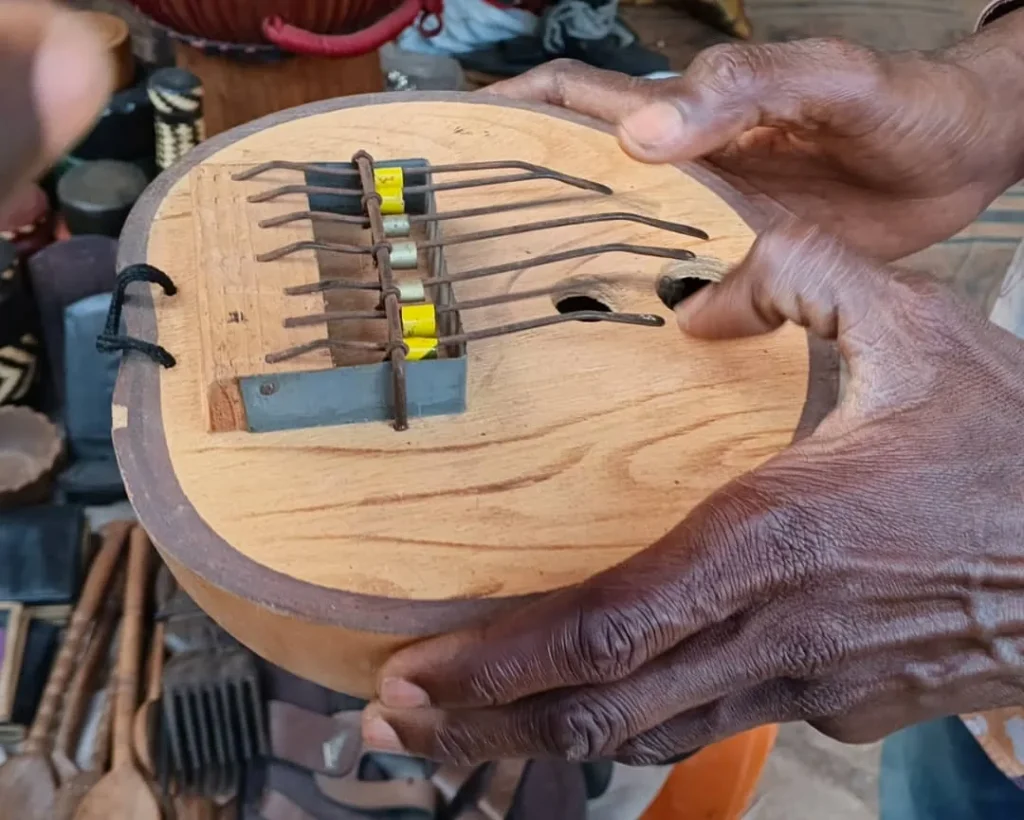
The kalimba has roots in sub-Saharan Africa that stretch back more than 3,000 years. Its gentle sound accompanies songs, stories, ceremonies and gatherings. This long history reveals a living instrument deeply connected to the communities that shaped it.
Related instruments were found in Cameroon, Zimbabwe, Malawi and the Zambezi Valley, among other places. Depending on the region, they had different names, including mbira, sanza and likembe. Each form reflected a local musical practice.
In the 1950s, ethnomusicologist Hugh Tracey popularized the name kalimba. In English-speaking countries, the instrument was also called a thumb piano. Classified as a percussion instrument, it is played by plucking metal tines with the thumbs.
To understand its roots, explore this introduction to the African instrument and its cultural heritage. The sections below trace its development, its sacred uses and the interest it attracts today.
Where Did the Kalimba Come From? History and Traditions
The earliest known traces appear on the West African coast, particularly in what is now Cameroon. They date back approximately 3,000 years. They shed light on the origins of an instrument made from local materials.
Early Traces on the West African Coast
The earliest thumb pianos used tines made from wood, bamboo, rattan or palm. At the time, metalworking remained limited in several regions. Few early instruments have survived, however, so their development is difficult to trace.
To investigate these African roots, researchers bring together surviving objects, local accounts and musical practices.
A Second Emergence in the Zambezi Region
About 1,300 years later, a related form appeared around the Zambezi, between Zambia, Zimbabwe and Mozambique. Its metal tines set it apart. No direct archaeological link confirms that it spread there from Cameroon. Its history therefore points to two early centres of development separated in time.
Key dates and materials:
| Region | Period | Materials |
|---|---|---|
| Cameroon | About 3,000 years ago | Wood, bamboo, rattan |
| Zambezi | About 1,700 years ago | Metal tines |
The Different Names for the Thumb Piano in Africa
In Africa, related instruments often have regional names. The modern term kalimba therefore exists alongside older names. Each name recalls a community, a musical practice or a particular tuning. This variety helps explain why no single model represents all these instruments.
Mbira, Sanza, Likembe and Other Regional Names
In Cameroon and Congo, names such as likembe, sanza and senza remain common. In Uganda, the terms lukeme and karimba appear in several accounts. Other variants include mbila, huru, nhare, matepe, njari, okeme, ubo and gyilgo.
These names do not always describe identical instruments. Size, number of metal tines, tuning and use can vary by region. For more on this vocabulary, consult this guide to African names.
Features of the Shona Traditions of Zimbabwe
For the Shona, the mbira is an emblematic instrument. It accompanies prayers, stories and community ceremonies. Its sound supports the voice while the thumbs create repeating patterns. The modern kalimba sometimes follows this principle, although its design is more recent. The next section explains how it works.
The Kalimba: A Percussion Instrument with Tines
Among African instruments, the kalimba stands out for its simplicity, light weight and expressive sound. To understand its classification, see this introduction to the instrument.
How the Thumbs Play the Metal Tines
Each tine vibrates when played with a thumb. The player plucks a tine to produce a clear note. The tines produce distinct pitches without a bow or membrane.
Wooden Resonance Boxes in Different Designs
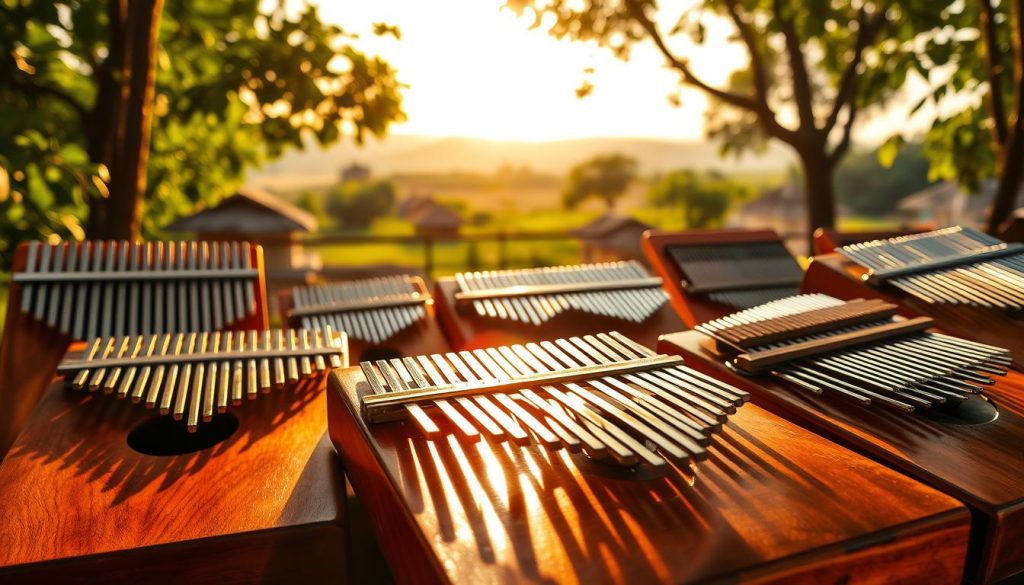
A wooden resonance box amplifies the vibrations. The soundboard supports the tines, while bridges hold them in place. Depending on the design, bamboo, local wood or metal changes the instrument’s tone.
This family also includes other thumb pianos. Each form suits a different kind of music. The modern kalimba remains approachable, with variations in size, tuning and tone.