
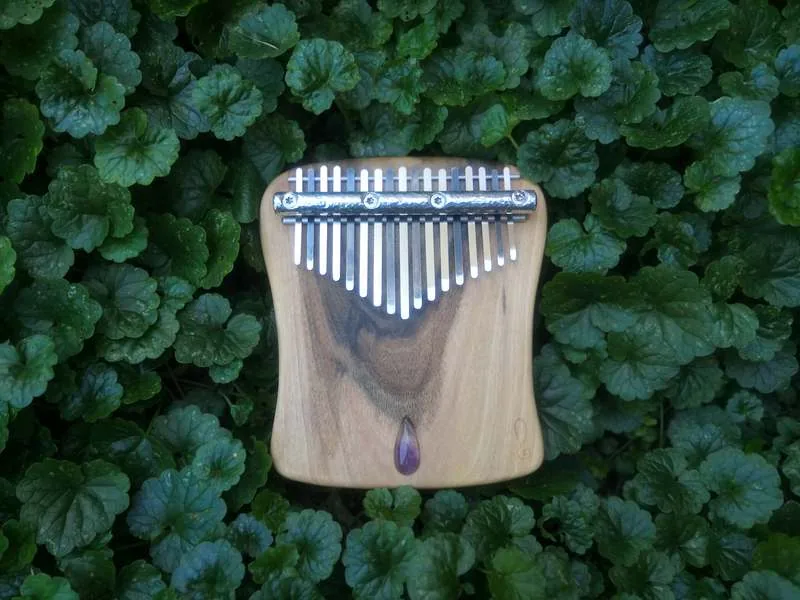
A kalimba is an idiophone with metal tines. Its sounds come to life under your thumbs, like a small thumb piano. Its compact size appeals to beginners, children and musicians who like to play on the go.
The small number of keys makes it easy to get started. Each tine corresponds to one note. Its melodic range is therefore limited, but learning to play feels gentle, intuitive and enjoyable. At around ten centimetres long, this instrument can often slip into a pocket.
A 17-key model gives you access to more sheet music, tablature and tutorials. A 21-note model adds four central keys. These formats are better suited to regular practice. Chromatic versions go further still, with 20 to 42 tines.
Before buying, examine the tuning, ergonomics, material, sound box and ease of use. A budget of around €30 is enough for an entry-level model. High-end models cost €80 to €150. You can also consult our guide to the number of notes. Instruments du Monde also offers a 17-key model with free delivery.
8-Tine Kalimba: Who Is It For and How Do You Choose One?
No single number of keys suits every musician. Skill level, experience, frequency of use and budget should guide your choice more than a model’s appearance.
Models are available with 5, 7, 10, 15, 17, 21 or 26 notes. The Meinl KA5S has five keys. At the other end of the range, chromatic versions offer a broader selection of notes. More notes let you play more melodies, but they do not guarantee better quality.
At Sanza, 38 models let you compare the wood, tuning, finish, sound box and playing comfort. Checking these features helps you avoid choosing on design alone. Consult this dedicated guide before adding a product to your cart.
An entry-level instrument costs around €30. The Gecko costs €119.99. The price often reflects the materials, the thumb piano’s precision, its finish and the stability of its sound.
| Format | Recommended player | Main advantage | Example |
|---|---|---|---|
| 5 keys | First-time player | Quick to learn | Meinl KA5S |
| 15 to 21 notes | Regular player | Wider repertoire | Melodic playing |
| 26 chromatic notes | Advanced musician | Greater musical freedom | Higher budget |
Understanding the Role of Tines and Notes on a Kalimba
Before playing, look at how the parts work together. Each tine has its own pitch. This arrangement makes playing intuitive, even without musical experience.
One Tine Produces One Note
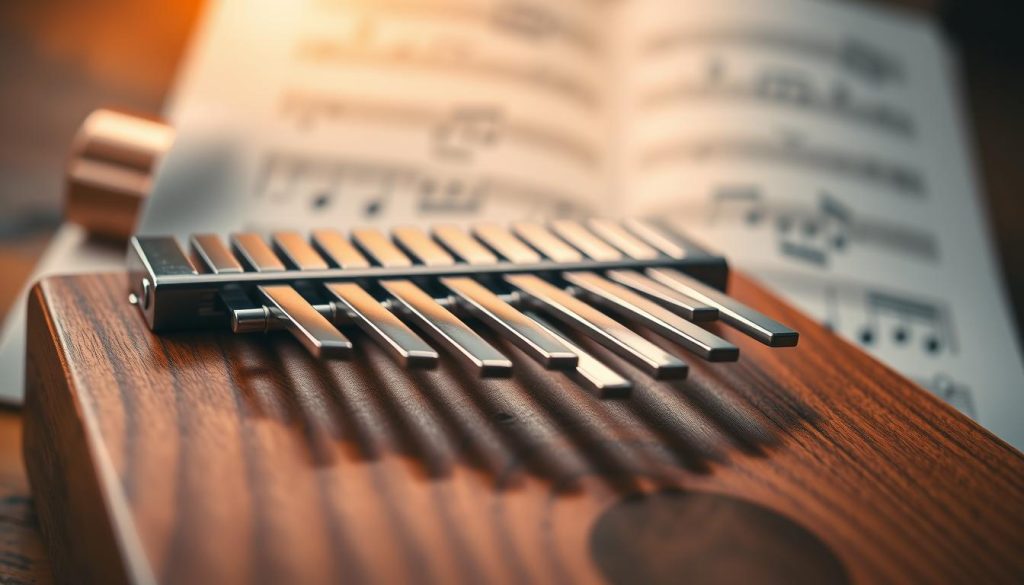
Each metal tine produces a particular note when plucked with a thumb. The movement is similar to pressing a piano key. Your thumbs alternate while your fingers stay relaxed.
A hollow sound box naturally amplifies the vibrations. Its resonance increases the volume and shapes the tone. Accurate tuning produces clear notes, which are more useful at first than a large range that is hard to memorise.
The kalimba belongs to the lamellophone family, alongside the mbira, sanza and likembe. Hugh Tracey popularised the term in the 20th century.
How the Number of Notes Affects Difficulty
An eight-key model can play fewer melodies than one with more tines, but its layout is easy to understand. That simplicity helps you memorise a short scale and then play small pieces.
Moving from 17 to 21 notes adds four central tines. Their position changes familiar playing patterns, so the instrument requires more attention. Consult our guide to the number of tines before buying.
Who Is an 8-Tine Kalimba Suitable For?
This small format suits people discovering the instrument. With fewer notes, it is easier to find the right tine for each movement. That makes the choice straightforward without feeling overwhelming.
A Welcoming Format for Beginners
The Meinl KA5S has five tines and suits a first experience. A model with two additional keys lets you play more melodic patterns. Pentatonic tuning limits dissonant combinations. A few minutes are often enough to play a short phrase without knowing how to read music.
A Fun Instrument for Children
Small hands can easily reach the central tines. The thumbs move freely without excessive strain. This instrument makes music tangible, gentle and fun. Short sessions help each child progress at their own pace.
A Compact Travel Companion
Models with fewer than ten keys are often less than about ten centimetres long. They fit into a bag or pocket. The Hokema B7 has curved ends that improve thumb comfort. You can take this kalimba on holiday, on journeys or to creative breaks.
| Player | Example | Advantage |
|---|---|---|
| Beginners | Eight-tine model | Quick to learn |
| Children | Small pentatonic model | Intuitive playing |
| Travellers | Meinl KA5S or Hokema B7 | Compact size |
Essential Criteria for Choosing a Quality Kalimba
A good choice depends on several factors: comfort, tone, stability, finish and budget. Shape alone is not enough. If you are starting out, consult this beginner’s kalimba guide before adding a model to your cart.
The Sound Box and Sound Effects
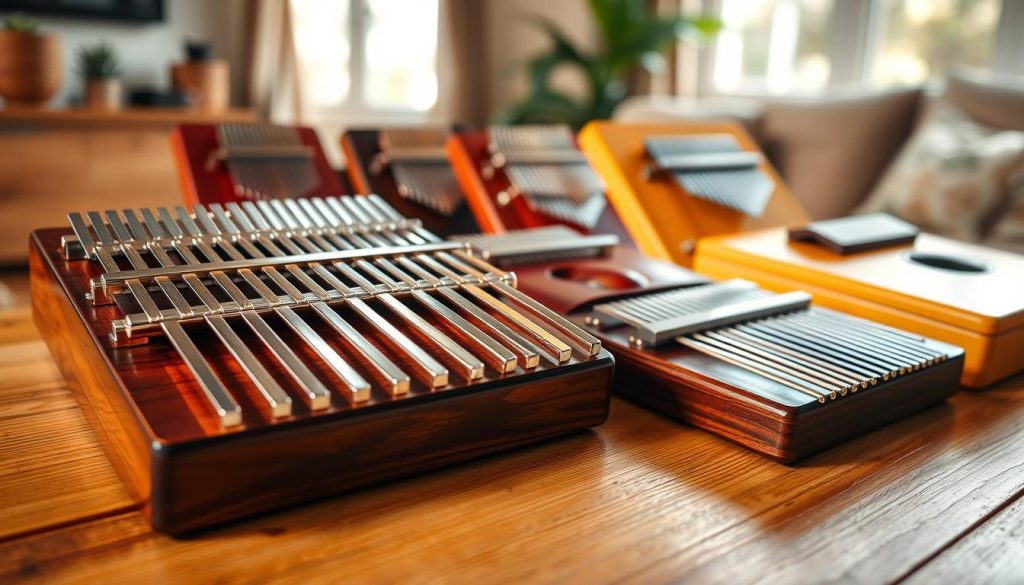
A flat board produces a direct sound that is often quieter. A hollow sound box naturally amplifies each vibration. Its resonance gives the notes more depth.
Holes in the back can also produce different effects. A finger can change the volume or create a subtle vibrato. This technique is possible on the AMI Hugh Tracey Alto, for example.
Wood, Tines and Build Quality
The wood influences the tone, feel and durability. The Meinl KL1008H Sonic Energy has ten tines and a mahogany body. The Sela SE 246 combines mahogany with metal tines and C major tuning, with a range from C4 to E6.
The AMI Hugh Tracey Alto is made from African kiaat and handcrafted in South Africa. Check every tine: a muffled note, unwanted vibration or slow response can signal lower quality. Also check the spacing between tines, the width of the body and the instrument’s stability. A price near €30 indicates an entry-level model; the Gecko costs €119.99.
A beautiful finish never guarantees a comfortable instrument.
Comparing an 8-Tine Kalimba with Models That Have More Notes
This middle format sits between a first introduction and regular playing. The Meinl KA5S has five tines, while the Hokema B7 has seven. The Meinl KL1008H has ten keys. These small instruments remain compact and require you to memorise only a few positions.
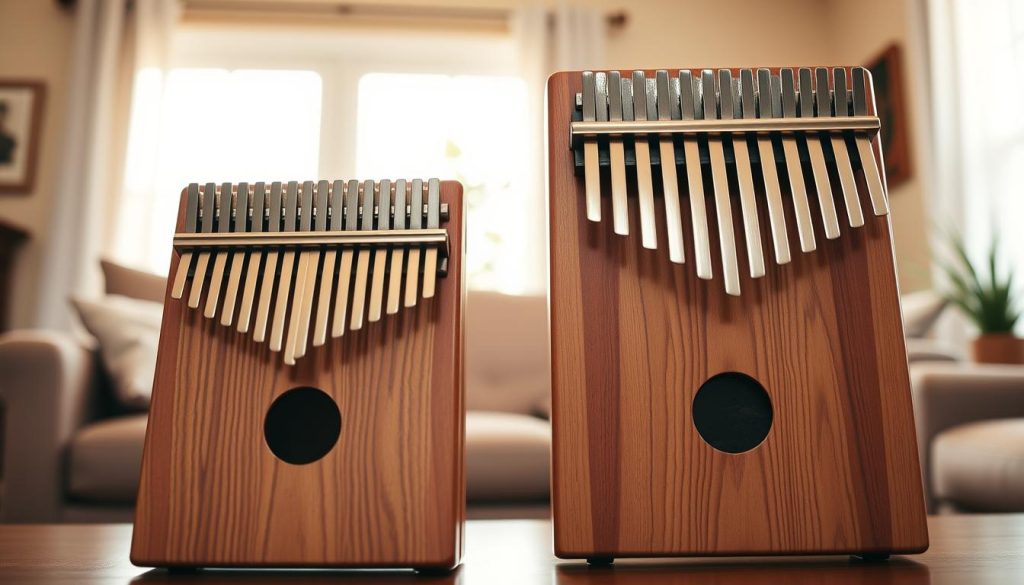
An early Hugh Tracey model, designed in the 1950s, had fifteen keys. Today, the seventeen-tine format is dominant. Most sheet music, tablature and tutorials use this layout, making a wider repertoire easier to access.
| Format | Learning curve | Repertoire | Portability |
|---|---|---|---|
| 5 to 10 notes | Very easy | Short melodies | Excellent |
| 15 to 17 notes | Gradual | Wide | Good |
| 21 notes | New key positions | Extensive | Moderate |
| 26 to 42 notes | Advanced | Chromatic | Varies |
A 21-key model adds four central tines. This arrangement can make it harder to adapt standard sheet music. The AMI Hugh Tracey Alto Chromatic has twenty-six notes. Versions with up to forty-two tines cover all twelve semitones of Western music.
- Beginner: compact format, simple tuning.
- Experienced musician: chromatic range, rich improvisation.
More notes do not always mean more enjoyment.
Consult this complete kalimba guide before making your choice.
Which Tuning and Playing Style Suit Your Level?
Your choice of tuning depends on your skill level, the music you want to play and how you plan to use the instrument. For a first experience, a simple layout helps you find each note. A well-tuned instrument then produces gentle sounds without discouraging the player.
C Major, the Pentatonic Scale and Other Tunings
C major remains a common choice. Its gentle sound suits many accessible melodies. The Sela SE 246 illustrates this choice: its keys cover a range from C4 to E6 and respond clearly under the thumbs.
The pentatonic scale offers a reassuring starting point. Its notes limit dissonance during improvisation. It therefore suits beginners who want to play freely without mastering all of music theory.
With more experience, a musician can try a minor scale or another tuning. Chromatic models provide access to all twelve semitones of Western music. They suit accompaniment, composition and playing from sheet music.
- Leisure: C major, easy to learn.
- Improvisation: pentatonic scale, reduced risk of dissonance.
- Composition: varied tunings, wider range of sounds.
A second instrument can also add variety to a collection. On an eight-tine model, sound holes let you create vibrato with your fingers. This technique does require good hand coordination.
Consult this complete kalimba guide to refine your selection.
The best tuning is the one that makes you want to play every day.
Conclusion
In short, an 8-tine kalimba is particularly well suited to beginners, children and travellers. This small instrument is light, simple and quick to learn. It offers a welcoming first experience.
Let your skill level guide your choice of key count. A 17-note model gives you access to more sheet music. A smaller format makes the first exercises easier without reducing the enjoyment. This instrument makes the thumb piano approachable.
Check the tuning, tine stability, comfort of the body, clarity of resonance and quality of the woodwork. C major and the pentatonic scale provide a gentle foundation. This thumb piano offers a relaxed introduction to world music.
Finally, compare quality, price, intended use, accessories and delivery. Most beginners can choose a wooden instrument with a hollow sound box for less than €50. Our guide to choosing a kalimba can help you confirm your choice before adding it to your cart. A considered decision will help you keep enjoying the instrument.