
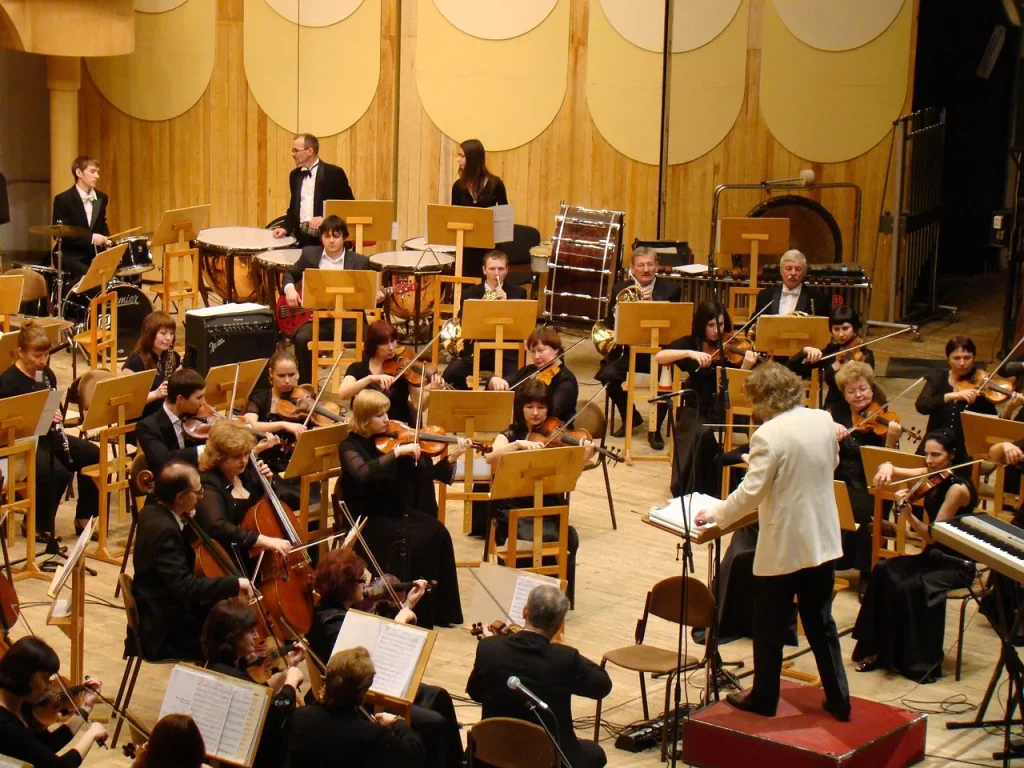
The instruments of a symphony orchestra are essential to creating a unique musical harmony. Each musician plays a crucial role in performing famous works. We will explore string instruments, wind instruments, and percussion and brass instruments.
These instruments are indispensable to the performance of orchestral pieces. They bring an incomparable richness to classical music.
Want to learn more about these instruments? Visit our contact page for more information.
Introduction to the symphony orchestra
The symphony orchestra is a showcase of musical virtuosity. It brings talented musicians together to create unique sounds. Since the 18th century, it has evolved, giving rise to different types of orchestra, including the philharmonic and baroque orchestras.
A symphony orchestra comprises several groups of instruments: woodwinds, brass, percussion, and strings. Together, these groups create a harmonious balance of sound. Virtuoso musicians perform around the world and touch listeners’ hearts.
Understanding how orchestral instruments have evolved is essential. Modern orchestrations are flexible: they meet the needs of today’s composers while respecting the past. This shows how the orchestra continues to evolve while staying true to its roots.
| Type of orchestra | Main characteristics | Examples of instruments |
|---|---|---|
| Symphony orchestra | Large ensemble with a wide range of instruments | Violins, trumpets, timpani |
| Chamber orchestra | Smaller, often more intimate | String quartet, woodwinds |
| Baroque orchestra | Period instruments and historically informed performances | Violins, transverse flutes |
| Philharmonic orchestra | Often associated with a permanent institution | Woodwinds, brass, percussion |
The music of a symphony orchestra combines skill and history. This introduction to the symphony orchestra opens the door to a rich and fascinating musical world.
String instruments in a symphony orchestra
String instruments are essential to a symphony orchestra. They bring warmth and depth of sound. Their variety makes it possible to create unique harmonies, from gentle melodies to powerful passages.
The violin
The violin is at the heart of the orchestra. This ensemble has 16 first violins and 14 second violins. With its four strings, the violin produces bright, high notes that are essential to musical expression.
The viola
The viola is larger than the violin. It brings a lower tone to the orchestra. The 12 violas enrich the harmony. Each has four strings and contributes to the balance of the sound.
The cello
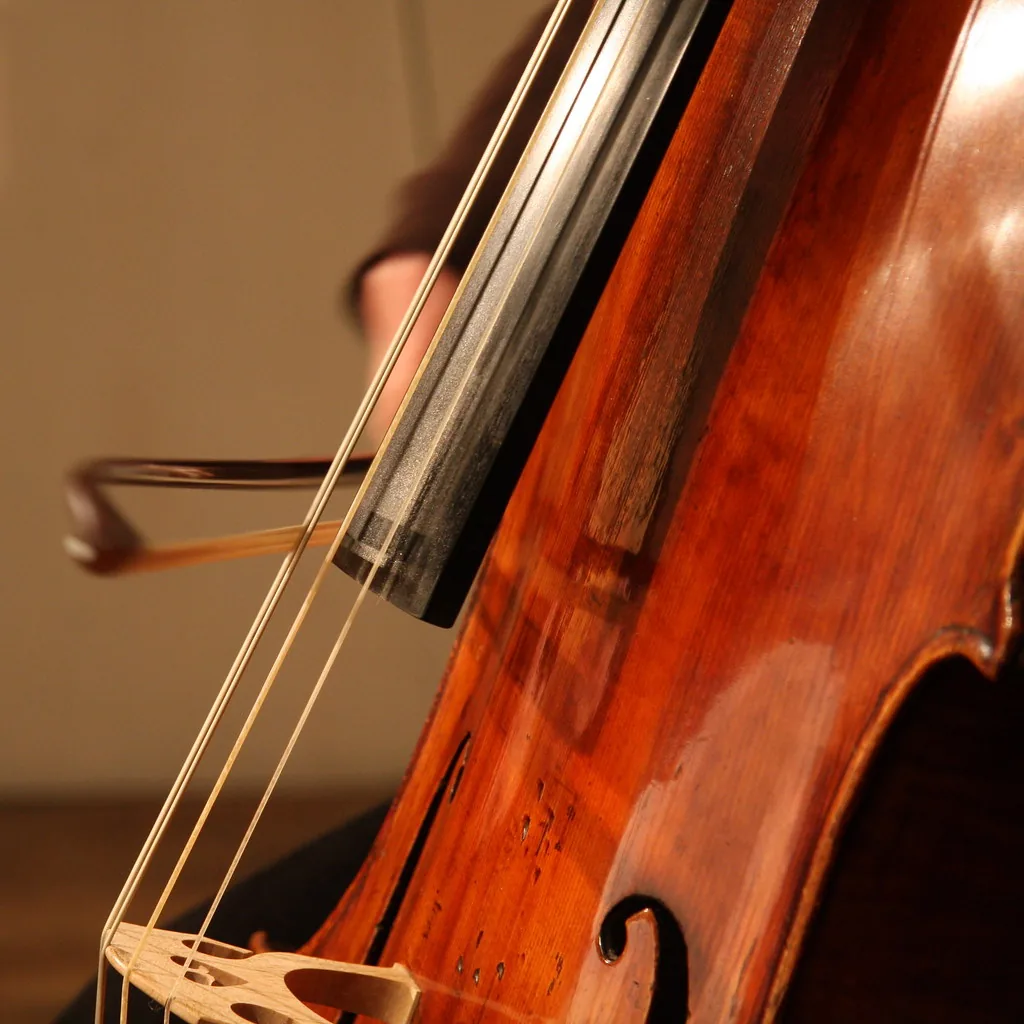
The cello is known for its emotional depth. The orchestra has 10 cellos, seated behind the second violins. Having changed from five strings to four, this instrument is essential to the orchestra.
The double bass
The double bass sits at the back. The eight double basses provide a solid foundation. They add depth and support the rhythm, enriching the orchestra’s sound.
| Instrument | Number of strings | Number in the orchestra |
|---|---|---|
| Violin | 4 | 16 first, 14 second |
| Viola | 4 | 12 |
| Cello | 4 | 10 |
| Double bass | 4 or 5 | 8 |
Wind instruments in the symphony orchestra
Wind instruments are essential to the symphony orchestra. They provide a wide variety of sounds. Each has a distinctive timbre that enriches the music.
The flute
The flute is known for its clear, lively sound. It often takes center stage in solo passages, adding brilliance to the orchestra’s music.
Classical works such as Mozart’s Flute Concerto in G major showcase its technical and expressive capabilities.
The oboe
The oboe is known for its vibrant, expressive sound. It is often featured in melodic solos and stands out across a range of musical styles.
Ensembles such as the symphony orchestra and the wind quintet demonstrate its importance in music.
The clarinet
The clarinet offers a wide range of sounds and a warm tone. Highly versatile, it fits well into different ensembles. Works such as Mozart’s Concerto for Clarinet in A major hold an important place in the clarinet repertoire.
The bassoon
The bassoon brings depth and richness of sound to the symphony orchestra. It is often used for melodic passages and accompaniment, helping to balance the sound of the wind section.
It also plays in various ensembles, demonstrating its usefulness and versatility.
Percussion and brass instruments
Percussion instruments and brass instruments are essential to a symphony orchestra. They bring power, color, and rhythm to every concert.
The timpani
Timpani appeared in the 19th century. They have evolved to meet modern needs and play a key role in music.
Percussionists use timpani to create powerful or subtle moods. They support the orchestra’s rhythm.
The horn
The horn is known for its warm, rich sound. Found in almost every orchestra, it is often featured in lyrical passages.
The horn is more than an accompanying instrument: its solo voice brings emotion. Musicians from many backgrounds play the horn, giving it a distinctive sound.
The trumpet
The trumpet is the highest-pitched brass instrument. Known for its brilliance, it plays a key role in jazz and classical music.
The trumpet is versatile. Whether driving the rhythm or taking a solo, it creates a fascinating interplay with other instruments.
To learn more about percussion, read this article about percussion instruments. Performers and composers continue to explore these sounds.
The essential instruments of a symphony orchestra
Every instrument in a symphony orchestra is essential. Together, they create a vibrant sound and express musical emotions. Strings, woodwinds, and brass form a harmonious ensemble. This variety is indispensable to performing classical and modern works.
The role and importance of each instrument
Strings, such as the violin, are at the heart of the melodies. Their expressive, warm sound enriches compositions. Woodwinds, such as the flute, add a distinctive energy. Percussion marks the rhythm.
Each instrument has its own history and role in the orchestra. The way they complement one another is essential.
Balance and harmony within the orchestra
Balance is essential to a successful performance. The arrangement of the instruments and their interactions create a delicate harmony. This allows composers to convey their musical vision.
For example, in a Beethoven piece, the clarinet and strings create moments of palpable intensity. This balance brings the symphony orchestra to life and allows it to move and inspire listeners.
Conclusion
Symphonic instruments offer a great variety of sounds. They are essential to creating a unique musical harmony. Every string, wind, and percussion instrument plays a crucial role in the orchestra.
Composers from Bach to Beethoven have used these sounds to enrich their works. They brought depth and intensity to classical music.
Instruments have changed over time, but have retained their essence. The transverse flute and the oboe have evolved to offer more expressive possibilities. These changes show why understanding music history matters.
Chamber music and symphony orchestras enchant listeners worldwide. They inspire audiences around the globe. Whether in a classical concert or a modern piece, their magic lies in the dialogue among instruments and the way they complement one another.
FAQ
What are the main instruments in a symphony orchestra?
What is the violin’s role in a symphony orchestra?
How do wind instruments affect orchestral music?
What sets timpani apart from other percussion instruments?
Why is balance among instruments essential in an orchestra?
How important are the string sections in an orchestra?
How do brass instruments contribute to the orchestra?
Source links
- https://www.recordingmag.com/resources/featured-reviews/april-2021-spitfire-abbey-road-one-orchestral-foundations/
- https://education.nsw.gov.au/teaching-and-learning/curriculum/creative-arts/creative-arts-curriculum-resources-k-12/7-10-curriculum-resources/instruments-of-the-orchestra
- https://www.wunderkammern.fr/les-instruments-les-plus-emblematiques-de-la-musique-classique/