
A symphony orchestra has between 80 and 100 musicians. It relies on a carefully planned arrangement of instruments that creates harmony and a balanced sound.
Each instrument family, such as the strings, winds and percussion, plays a particular role and has a specific place in the orchestra. String instruments, for example, are closer to the audience.
The arrangement varies with the music being played. Wagner’s works call for more musicians, while Haydn’s can be performed by a smaller ensemble. This shows how important the orchestra’s arrangement is.
The instruments are placed according to their volume and the conductor’s preferences. This arrangement contributes to the quality of the performance. To learn more, watch this informative video.
The differences between a symphony orchestra and a concert band illustrate the variety of orchestral music.
Instrument families in the symphony orchestra
A symphony orchestra is organized into several instrument families. Each brings its own tone color and contributes to a complex harmony. The main families are the strings, winds and percussion.
Strings
The strings, such as violins and cellos, are at the heart of the orchestra. The first violins sit near the conductor, making it easier to communicate as they create the harmonies.
Winds
The winds, which include woodwinds and brass, sit behind the strings. Woodwinds, such as flutes, are in the middle. Their warm sound complements the strings. Brass instruments, such as trumpets, sit farther back and project their sound.
Percussion
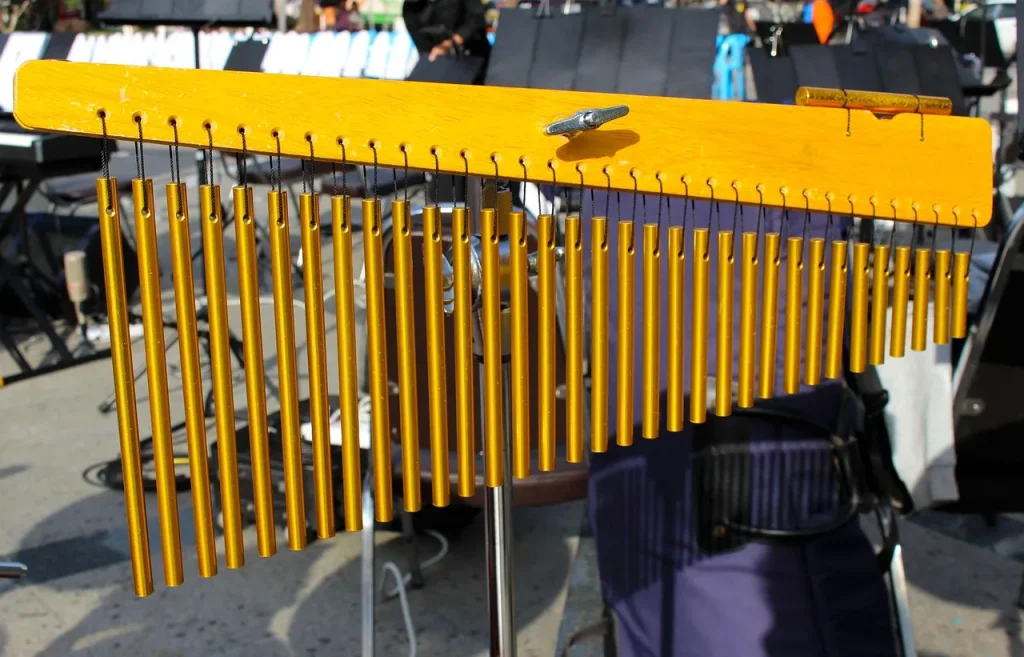
The percussion sits at the back. Instruments such as the bass drum add a lively rhythm. Percussion instruments are varied and play a crucial role without drowning out the other instruments.
Exploring the history and styles of performance shows how the classification of instruments has evolved.
How instruments are placed in the orchestra
The position of instruments in an orchestra matters for achieving a balanced sound. This arrangement has changed considerably over time. It varies with the type of orchestra and the conductor’s choices.
Seating plans through the ages
Seating plans have changed considerably over the centuries. In the Baroque era, the first violins were on the left and the double basses on the right. This arrangement created a particular sound balance.
The Classical and Romantic periods brought further changes. More brass and wind instruments were added, changing the layout to preserve a balanced sound.
Where the sections sit
The sections of a symphony orchestra follow a precise arrangement. The strings sit in a semicircle in front of the conductor, making it easier to lead the ensemble.
The winds sit behind them in rows. The brass sits farther back so it does not overpower the sound. The percussion is at the rear, where it helps balance the sound while adding powerful effects.
How are instruments arranged in a symphony orchestra?
The arrangement of instruments in a symphony orchestra is essential to a harmonious performance. The conductor plays a central role: they lead the musicians and influence their positions on stage.
The conductor’s role in the arrangement
The conductor coordinates the sections and arranges the instruments. Their choices reflect their preferences and interpretation of the music. They guide the orchestra so the musicians play together and the instrument families interact.
How the repertoire affects the layout
The arrangement of instruments changes with the work. For example, pieces that feature brass and percussion prominently call for particular seating arrangements. More intimate compositions may favor the strings and create a different atmosphere. The arrangement of instruments therefore depends on the musical style and the characteristics of each piece.
How the arrangement of instruments has evolved
The arrangement of instruments in an orchestra changed greatly from the Baroque to the Romantic period. Each era introduced innovations that enriched orchestral arrangements.
From the Baroque to the Romantic period
In the Baroque and Classical eras, orchestras in France varied widely and brought together many timbres and registers. For example, the King’s Twenty-Four Violins included several violin sections, from the highest to the lowest.
Orchestras were relatively small at the time, but grew considerably during the Romantic period. The Royal Academy of Music, for example, had about eighty musicians in 1778. They played many instruments, including horns and clarinets.
These changes show how orchestral instruments evolved.
Changes in modern orchestras
Today, conductors and composers experiment with new orchestral layouts to create distinctive sounds. Quieter instruments are placed closer to the audience, producing interesting effects.
Styles and influences have become much more varied. Contemporary music incorporates elements of jazz and electronic music. To learn more about the evolution of instruments in orchestras, keep reading.
| Period | Characteristics of the orchestra | Key instruments |
|---|---|---|
| Baroque period | Small, uniform ensemble | Violins, viola da gamba |
| Classical period | Increasing size and variety | Violins, brass, woodwinds |
| Romantic period | Large, richly varied orchestra and dramatic effects | Harp, tuba, percussion |
| Modern period | Flexible layouts and experimentation | Varied instruments and contemporary influences |
Conclusion
The arrangement of instruments in a symphony orchestra is essential. It has evolved to bring sounds together more effectively and allows every instrument to contribute to the overall sound.
Today’s composers are creative. They use orchestration techniques to create distinctive moments. Their choice of timbres and registers is crucial to producing contrasts in sound.
Playing together helps musicians improve their skills and enriches their musical education. It is important to keep exploring new ways of arranging instruments.
To learn more about the importance of orchestration, click here.