
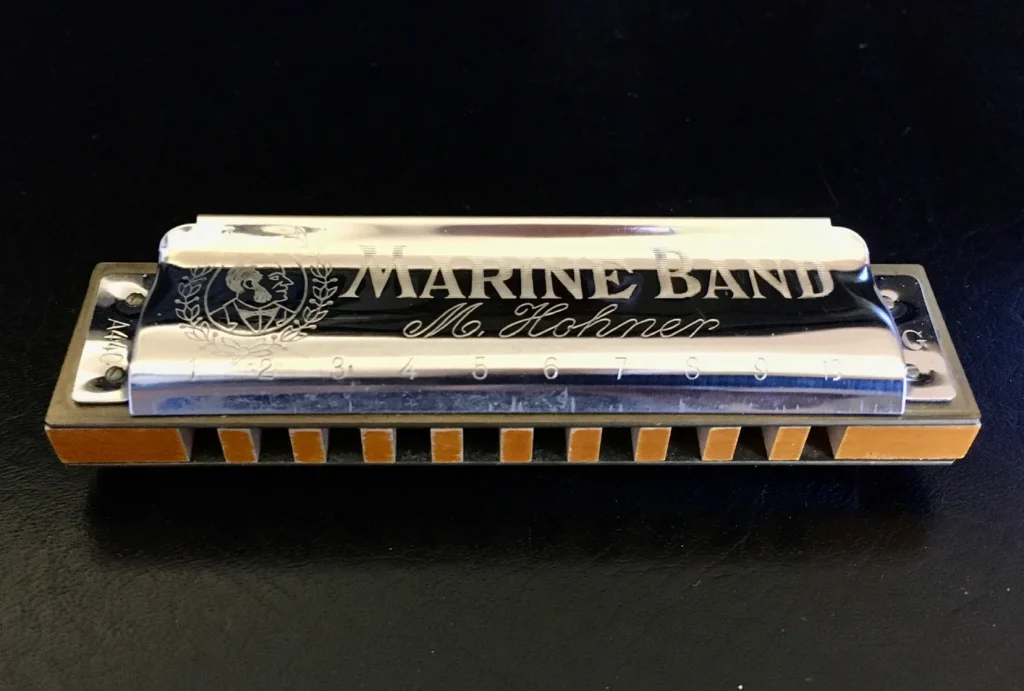
The Hohner Marine Band is a benchmark harmonica first made in 1896. Its history gives it a unique place among wind instruments.
This model appeals to blues, rock and folk musicians thanks to its classic design and quality materials. Its pearwood comb, 0.9 mm brass reed plates and stainless steel covers contribute to its rich, singing sound.
Onstage, in the studio or at a jam session, it offers a precise response and expressive nuances. Its warm tone works across many genres, making it an excellent choice for discerning musicians.
This guide explains who this model is for, which styles it excels in, which technical features to check and how it compares with the Special 20. Its longevity and build quality keep it relevant today.
Who is the Hohner Marine Band harmonica for, and where can you play it?
Ideal for demanding performers, this harmonica suits musicians seeking character and an immediate response. It offers useful projection in concert and precise nuances in the studio.
Motivated beginners will find it a rewarding instrument to learn on, especially if they want to progress in blues, rock or folk. Experienced players appreciate its consistent performance and rootsy tone, which gives every phrase character.
Playing situations include intensive rehearsals, jam sessions with one chord progression after another, concerts that call for projection and stability, and studio takes where dynamics matter.
- Who it suits: musicians who value expression and a distinctive sound.
- Learning benefit: suitable for motivated beginners who want to work on bending and phrasing.
- Versatility: predominantly blues, as well as storytelling folk and energetic rock.
Richter tuning makes chord changes and bends easier, helping expressive playing feel more natural. In short, this model is recommended for anyone seeking an instrument with a strong character for concerts and rhythmic or melodic performances.
Hohner Marine Band: who is it for, and what styles does it suit?
The deep, direct sound of this instrument attracts determined beginners and professionals looking for expression alike.
Musician profiles
Motivated beginners see it as an excellent learning tool. The comb’s feel and the reeds’ response help them develop their playing skills and musical ear.
Blues enthusiasts
Blues players look for a gritty tone and deep bends. This 10-hole diatonic model delivers the warm sustain that demanding players prize.
Live performers
Onstage, durability and sonic presence matter. Musicians appreciate its precise note attacks and faithful reproduction of their playing in a group.

- Main styles: blues, rock and folk — an authentic sound suited to many genres.
- Keys: available in a range of keys to suit most repertoires.
- Recommended level: beginner to advanced — every player can find a way to express themselves.
In concert, this harmonica brings simplicity, presence and expression. It can become a central part of musical projects that value authenticity.
Key features and materials: what shapes its “authentic” sound
The chosen materials largely determine the instrument’s tone and durability. Quality and classic design combine to give it a warm, expressive voice.
Pearwood comb
The comb made of pear wood gives it a warm tone and a natural feel in the mouth. It helps produce the organic projection sought by blues players.
Reed plates and covers
The 0.9 mm brass reed plates offer an excellent balance of responsiveness and harmonic richness.
The stainless steel covers provide longevity, mechanical stability and a more open sound for clear notes.
Tuning and heritage
Richter tuning makes note sequences easier and bends more accessible. The reeds respond dynamically, making nuances and phrasing easier to control.
“A well-designed instrument reveals the musician’s playing.”
Since 1896, this classic design has provided reliable performance onstage and in the studio, with lasting tuning stability and quality.
- Features: pearwood comb, 0.9 mm brass and stainless steel.
- Result: authentic sound, projection and note control.
Compare before you choose: Marine Band, Special 20 and other Hohner models
Comparing models helps you choose the harmonica that truly suits your playing.
The Marine Band has a warm edge thanks to its wooden comb and brass plates. Its tone is more traditional and textured. The Hohner Special 20 puts comfort first, with a plastic comb, airtight construction and an immediate response. It makes notes easier to produce and is easier to maintain.
For complex melodic lines, the chromatic Chromonica 270 offers a smooth slide, 48 reeds and three octaves. It is ideal for jazz and classical music, where precise transitions matter.

| Model | Materials | Recommended use | Main advantage |
|---|---|---|---|
| Marine Band | Wooden comb, brass plates, steel covers | Blues, rock, folk (phrasing, bends) | Traditional tone, harmonic richness |
| Special 20 | Plastic comb, brass plates | Jam sessions, studio, beginners | Airtight construction, playing comfort |
| Chromonica 270 | Wood or plastic, depending on the version; 48 reeds | Jazz, classical music, chromatic melodies | Access to every note, precise transitions |
To cover several repertoires, start with C, then add D and G. This simple set lets you accompany most groups. Your final choice depends on the musical style and how the instrument feels in your hands.
“The right harmonica serves your expression, not the other way around.”
Buying and playing tips for 2025: choose the right model and get the most from it
Choosing the right harmonica in 2025 starts with defining where you will play it. Decide whether you play at jam sessions, in concerts or in the studio. This will guide your choice of model and the skill level it requires.
Choose by musical style, skill level and playing situation
Practical tip: start with a Hohner Marine Band in C. You can then add other keys to play along with more songs.
Practice and care
To improve, practise bends regularly and clean the harmonica after every session. Also work on breathing, relaxing your jaw and positioning your tongue.
Suggested routine: 15 to 20 minutes of technique (bends, note attacks), 20 minutes of repertoire and 10 minutes of improvisation.
Explore keys with digital tools
Jamzone lets you transpose tracks instantly and offers HOHNER SELECT playlists. It is ideal for practising in different keys without changing instruments.

- Check for air leaks and inspect the reeds before a concert.
- Clean it lightly after every session, inspect it weekly and replace it if it loses responsiveness.
- Choosing the right model for your skill level and intended use supports performance and longevity.
“Good maintenance preserves the instrument’s sound quality and responsiveness.”
Conclusion
Its signature sound has endured for decades and remains popular with many performers.
The Hohner Marine Band remains a benchmark diatonic harmonica. It offers an authentic, expressive sound that is ideal for blues and other lively musical genres.
With its pearwood comb, 0.9 mm brass plates and stainless steel covers, this model combines warmth and durability. Its notes respond sensitively to the musician’s intentions.
Choose a suitable model, gradually build a set of keys and develop good practice habits. If you are still unsure, read our advice on which harmonica to choose.
Overall, it is a dependable choice whether you are discovering the Marine Band or adding to an existing set.