
This guide offers a clear approach to choosing a reliable, comfortable harmonica holder. It brings together practical information, hands-on tests and historical context to help you decide.
First appearing around 1870 in the United States, the device freed guitarists’ hands and became established in country music, then blues. Today, there are traditional neck racks, amplified models and stand-mounted systems for every style.
In this article, we cover our testing method, compatibility, materials, angles and stability. We also explain how ergonomics affects note accuracy and reduces fatigue on stage or in the studio.
You’ll find concrete examples (Hohner, Lee Oskar, Seydel) to compare models according to how you play — guitar and vocals — your skill level and your budget. The aim is to turn subjective impressions into decisions supported by evidence.
Why buy a harmonica holder today?
Today, playing guitar and harmonica at the same time is a practical advantage for any solo musician.
A rack offers immediate benefits: it lets you accompany yourself while singing, enrich your arrangements and vary your sound in concert.
It is especially useful for musicians who create content. Intimate videos and solo recordings become easier to make. Setup on stage is quick, too.
The accessory makes playing easier: it frees your hands for the guitar and helps you maintain a rhythm supported by your breath.
Typical uses include rehearsals, acoustic concerts, home recordings, street performances and mobile sessions where low weight matters.
In folk, blues, country and rock, the harmonica adds character and a storytelling quality to the sound, recognized around the world.
The options below range from traditional neck racks to stand-mounted and even amplified systems. The learning curve is manageable, and the initial investment is modest compared with other instruments. It could transform your musical life.
Harmonica holders: selection criteria and hands-on tests
Before buying, check compatibility with your main harmonica. Racks designed for 10-hole Richter-tuned diatonics hold standard models more securely, but the length and shape of the cover plates also affect the fit.
Instrument compatibility
Some holders accommodate harmonicas up to 16.5 cm long. Chromatic models need specific solutions because of their slide; we discuss them below.
Comfort and ergonomics
Look for a neck rack with a rubberized coating to reduce pressure points. Anodized steel and sturdy plastics limit slipping and improve playing comfort.
Available adjustments
The best models offer tool-free angle and height adjustments, along with thumb screws that keep the rack stable. Proper adjustment aligns the harmonica with your mouth without straining your neck or hands.
Size and durability
Check the weight and the strength of the springs and hinges for stage use. Always try the rack with your usual guitar to assess how much space it takes up, how it pivots and whether you can see your reference points.
Quick refresher: diatonic and chromatic harmonicas, keys and playing styles
To test a holder, first decide which instrument and key you will use as your reference.
Choosing a harmonica for testing
For learning and testing, choose a harmonica in B-flat. It is used in 90% of jazz, blues and rock situations.
The diatonic harmonica (Richter tuning) lends itself to expressive playing and bends.
The chromatic harmonica has a slide that lets you produce every note mechanically.
Recommended models
Beginners: Hohner Golden Melody, Hohner Special 20, Tombo Lee Oskar.
Intermediate: Hohner Rocket Progressive. Premium: Suzuki Hammond HA-20 (a “powerhouse”).
Playing styles and what they mean for the rack
Folk or country playing calls for a more open angle. Blues requires greater stability for bends and note projection.
Use the same guitar and audio setup for consistent comparisons: many professionals prefer this approach.
| Type | Key | Use | Recommended model |
|---|---|---|---|
| Diatonic | B-flat | Blues, folk, country, rock | Special 20 / Golden Melody |
| Intermediate | B-flat | Expressive playing, bends | Rocket Progressive |
| Premium | B-flat | Studio, demanding stage performances | Suzuki Hammond HA-20 |
Tip: when adjusted properly, one rack works with harmonicas in several keys. B-flat provides a straightforward starting point for your comparisons.
How to test a harmonica holder
To evaluate a holder, test it in three real situations: acoustic guitar, electric guitar and singing. This reveals its stability, comfort and adjustment needs.
Some DIY enthusiasts have amplified racks for playing electric guitar. If you try this, watch how the setup holds up and how you coordinate your strumming hand with movements of your mouth. This technique takes practice.
Quick test procedure
- Play three representative pieces: a folk song with rhythm accompaniment, an electric blues shuffle and a sung ballad.
- Measure note accuracy by alternating single notes, double stops and bends, then note how well your mouth lines up with the holes.
- Assess hand and neck fatigue after 20 to 30 minutes; identify any pressure points.
- Test inserting and removing the harmonica, screw stability, dynamic response, and playing while standing and seated.
Record the time needed for setup and how you store the rack. Use the same audio setup for each test to isolate the rack’s effect on your musical phrases and meet your clients’ needs.
Hohner FlexRack: the versatile essential
The Hohner FlexRack stands out for its understated, sturdy construction, designed for the stage.
Construction, tool-free adjustments and comfort
Materials: a black anodized steel frame with a durable finish and professional appearance. The neckband has a nonslip rubberized coating that reduces pressure points and protects your neck.
Adjustments: four thumb screws let you change the angle and height without tools. The settings stay in place when you change harmonicas, saving time in rehearsal.
Compatibility, feedback and value for money
Compatibility is confirmed up to 16.5 cm, covering most diatonic harmonicas and some longer models.
- Comfort during long sessions thanks to the nonslip coating.
- Fine, stable adjustment for accurate playing without straining your neck.
- Indicative price: around €54 at Thomann, a very competitive price for these features.
| Strength | Detail | Benefit for the player |
|---|---|---|
| Finish | Black anodized steel | Durability on stage |
| Adjustment | 4 thumb screws (tool-free) | Speed and stability |
| Comfort | Rubberized coating | Fewer pressure points |
| Compatibility | Up to 16.5 cm | Fits most harmonicas |
Conclusion: this internationally known brand offers a reliable rack at a good price. It makes an ideal reference when testing other models. Watch a demonstration video to see its adjustments in action.
Amplified BluexLab Flexrack: a rack with a built-in microphone
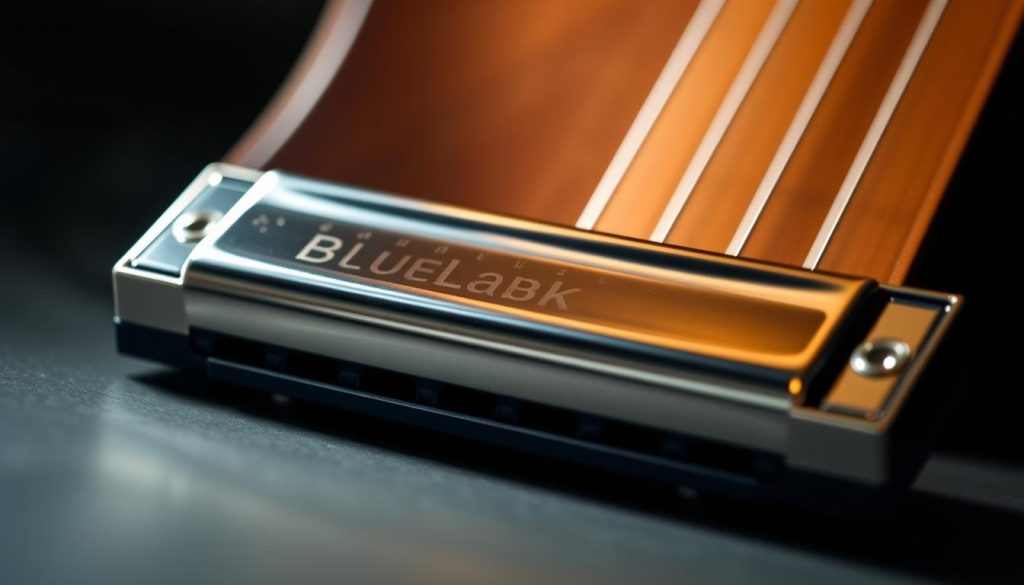
The BluexLab version combines a solid rack with a NOS crystal microphone element housed in an aluminum tube. This design produces a more compressed, vintage sound suited to blues and rock.
NOS crystal element, spring-mounted holder and volume control
According to the brand, the spring-mounted holder accepts most 10-hole diatonic harmonicas without major modification.
The high-impedance pickup responds precisely to attacks. An optional inline volume control helps balance the harmonica with the guitar and vocals.
Who is it for? Stage, mixing desk, video and more “compressed” sounds
Connect it directly to a mixing desk: it is practical both in concert and in the studio. The simple audio setup suits single-camera video recordings.
| Element | Feature | Benefit |
|---|---|---|
| Microphone | High-impedance NOS crystal element | Vintage character, clear response |
| Mount | Spring-mounted holder | Broad harmonica compatibility |
| Control | Inline volume (optional) | Dynamic control without a mixing desk |
No public price is listed: contact BluexLab for a quote and information about available parts.
Practical tip: test sustained notes and bends to check that projection is even across the full range. This rack suits musicians who want a minimal, repeatable setup in a professional setting.
Front And Center Mics G-Rig: a wooden, stand-mounted holder with compression
The G-Rig offers an elegant solution: a stand-mounted holder that showcases both sound and appearance. Made in the United States, it attaches to a microphone stand, so you do not have to wear a neck rack.
Craftsmanship, wood choices and appearance
The housing is made from several kinds of wood, including sycamore, ebony, cherry, black walnut and figured maple. Its refined, premium appearance looks good on stage or on camera.
Compression chamber and potentiometer for clean or compressed sound
The electronics use a NOS ceramic element. An internal compression chamber and a potentiometer let you move from a clean sound to a more compressed one.
This control shapes the notes and dynamics. The musician can adjust the attack without changing the microphone and guitar audio setup.
Advantages, limitations and intended use
Advantages: excellent stability, independently adjustable height, better posture for singing and more natural breathing during a music performance.
Limitations: reduced mobility, the need for a dedicated stand and a playing angle that differs from neck racks.
- Price: $225 to $325 (approximately €170 to €246), excluding shipping.
- Ideal for musicians who want an adjustable sound and a polished appearance on stage.
- Watch demonstration videos to assess the attack, sustained notes and sound in a real playing situation.
When choosing, compare the G-Rig with a traditional rack to assess comfort and sound control with your instruments and repertoire in real conditions.
Duoharp: playing two harmonicas on one rack
Changing keys without interrupting the music changes your stage presence. A dual mount gives you that freedom: two ready-to-play instruments broaden your sound during a concert.
Kwik Change and Kross Box: fast changes and dual mounting
Kwik Change (Duoharp, United States) attaches to a traditional rack. It is designed for quick, secure one-handed changes.
The Kross Box follows the G-Rig concept: two harmonicas side by side, immediately accessible for switching keys or tunings.
Harplock: simple design, modest price and intended users
The Harplock has a minimalist design. Indicative price: $25.95 to $29.95, excluding shipping. It is an ideal way to try playing with two harmonicas without a large investment.
- Benefit: instant transitions between keys.
- Uses: folk, country and blues — styles that call for variety and fluidity.
- Learning curve: practice coordinating your hand and guitar, as well as positioning your mouth.
| Product | Function | Strength |
|---|---|---|
| Kwik Change | Quick-change accessory | One-handed changes |
| Kross Box | Dual holder | Two instruments ready to play |
| Harplock | Simplicity | Good value for its function |
Tip: check compatibility with your harmonicas and rack before buying to avoid surprises on stage or in the studio, where ease of use matters.
Chromatic harmonica on a rack: ingenious but demanding solutions
Using a chromatic harmonica on a rack requires an additional mechanism: you must be able to operate the slide hands-free.
Chin-operated control (Dietmar Link)
Dietmar Link’s system operates the slide when you lower your jaw. It works with 10- to 16-hole instruments.
Indicative price: €135. This setup requires careful coordination of your jaw, breath and position to keep phrases accurate.
Floor pedal (Chuck Rejto / Sea-Are Productions)
The pedal develops Vern Smith’s idea: a steel cable connects the slide to a foot pedal. Rubber stops let you adjust its travel.
Benefit: repeatable action independent of your breath. Designed for 12-hole models, this solution can be adapted to 16-hole models. Indicative price: $500, excluding shipping.
Learning curve, ergonomics and choosing between 12 and 16 holes
The chin-operated control requires fine motor training. The pedal requires you to coordinate your foot movement separately from your breathing.
A 12-hole model limits length and weight; a 16-hole model offers a wider range but places greater demands on the holder’s stability.
| Solution | Compatibility | Strength | Price |
|---|---|---|---|
| Chin-operated rack (Link) | 10 to 16 holes | Direct jaw control, simple mechanism | About €135 |
| Pedal (Rejto) | 12 holes (adaptable to 16 holes) | Precise, repeatable action; foot control | About $500 (excluding shipping) |
| Practical choice | 12 or 16 holes | Ergonomics or range | — |
Tip: test extensively before buying. Start with short phrases, steady your gaze and improve your accuracy, then make your playing more complex to avoid strain and frustration.
A practical example: Hohner 5387 (10 holes, Richter tuning)
To understand the basics, let’s examine a simple model that combines comfort, a secure hold and an accessible price.
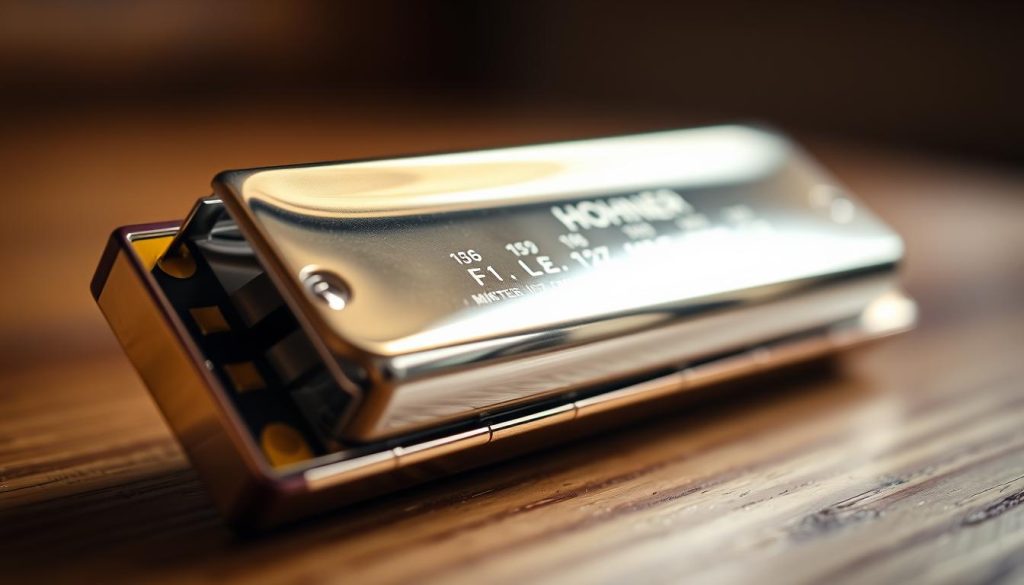
Main features
The Hohner brand’s 5387 model is intended for 10-hole Richter-tuned diatonic harmonicas.
Plastic-coated neck rack, double-spring-mounted clamp and a usable length of 10.6 cm.
Use and reviews
The double spring provides a firm hold. Its operation is intuitive when you need to change instruments quickly.
The perceived quality is reasonable for an entry-level model; it is ideal for rehearsals or as a backup rack.
Average rating from a few customers: 3.9/5 across 7 reviews. This score suggests good value for the price while pointing to limits in long-term durability.
Practical tip: check the angles and contact points if the holder hurts your neck. This model is a good example for learning to adjust a traditional rack before investing in a custom model.
Coordinating guitar and harmonica: making your first sessions work
Combining a guitar rhythm with a harmonica melody takes gradual practice. Start slowly: aim to keep your strumming hand moving evenly while shifting your mouth along the comb to find the middle holes.
Practical exercises:
- 10 min: strum steady beats on an acoustic guitar with a metronome.
- 10 min: play simple harmonica patterns to steady your breathing.
- 10 min: play while singing softly, then increase the tempo.
Adjusting the rack for accurate playing
Adjust the rack’s angle and height so the middle holes sit naturally in front of your mouth. Proper adjustment keeps you from lifting your neck and reduces fatigue.
Hand position and posture
Keep your strumming hand steady and your shoulders relaxed. Make small changes to the position of your torso instead of your neck. Practice in short, regular sessions: several short sessions are better than a long one.
| Goal | Exercise | Duration |
|---|---|---|
| Coordination | Metronome and simple guitar strumming | 10 min |
| Breathing | Short harmonica patterns | 10 min |
| Putting it together | Playing, with optional singing | 10 min |
Tip: record a short video to check alignment and posture. With time and practice, you will learn to play harmonica while keeping control of the guitar.
Budget and prices: how much should you invest?
Before buying, estimate how you will use the rack: trying it out, playing regularly or performing professionally. This will guide your spending and choice of useful features.
Entry level — low cost: to try it out, expect to spend roughly $25 to $30 (Harplock, Kwik Change). These inexpensive options are sufficient for a few rehearsals.
Midrange — versatility: a Hohner FlexRack at around €54 offers comfort and useful adjustments. It is a good compromise for musicians who play regularly.
Premium and professional options: the G-Rig ($225 to $325) and chromatic systems (Dietmar Link: around €135; Rejto pedal: around $500) are aimed at stage and studio musicians. Allow a larger budget if you want a built-in microphone or a setup for two harmonicas.

Factor in international shipping, parts availability and how the cost spreads over several years. For an active musician, a professional purchase may pay for itself within a few months through concerts and sessions. Reread this article to find the right balance of comfort, features and price.
| Range | Example | Indicative price |
|---|---|---|
| Harplock / Kwik Change | $25.95 to $29.95 | |
| Versatile | Hohner FlexRack | About €54 |
| Professional | G-Rig / chromatic pedal | $225 to $500 |
Brands, models and availability in France
Availability varies considerably depending on where the manufacturer is based.
Where should you look? Hohner is widely distributed in Europe through dealers and music websites. BluexLab (Italy) sells its amplified rack mainly through its official website, alongside demonstration videos.
Hohner, BluexLab, Front And Center Mics and Duoharp: where can you find them?
Front And Center Mics (United States) sells the G-Rig on its website. Duoharp (United States) sells Kwik Change, Kross Box and Harplock directly, with prices excluding shipping.
- Information and videos: watch demonstrations to assess the angles and sound before buying.
- Importing: consider costs, delivery times and return policies for products from outside the European Union.
- Compatibility: check the harmonica lengths and cover-plate types specified by the brand.
| Brand | Where to buy | Strength |
|---|---|---|
| Hohner | European dealers | Wide distribution, local after-sales service |
| BluexLab | Manufacturer’s website (Italy) | Amplified rack, videos |
| Front And Center Mics | Manufacturer’s website (United States) | Premium stand-mounted system |
| Duoharp | Manufacturer’s website (United States) | Dual mounting, accessories |
Tip: choose established dealers in France for better after-sales service, and contact the brand for spare parts or technical details.
Adjusting, maintaining and extending the life of your accessory
An accessory’s lifespan depends as much on its materials as on your maintenance habits. Modern racks use thumb screws, springs and nonslip coatings. Simple care preserves their stability over time.
Regular checks: make sure the screws are tightened evenly, the rack is aligned and the hinges have no play. Watch for worn springs and a weakening clamp; replace them if the hold becomes less secure.
Periodically clean areas that touch skin and sweat. A soft cloth and a gentle cleaning product are enough. This extends the life of the coating and prevents odors.
- Inspect it visually each month for small deformations and the effects of repeated vibrations.
- Check it before going on stage: tighten it, align it with your harmonica and try its full range of positions.
- Store it away from moisture and protect it from heavy loads during transport.
Practical tip: keep reference photos or write down your adjustment settings. With proper care, an accessory can perform well for years, even with regular use. Your instruments will stay dependable on stage and in practice.
Common mistakes to avoid with a harmonica holder
You will quickly notice a poor setup during a rehearsal or concert.
Incorrect alignment: when the rack is off-center, the holder hurts your neck and makes it harder to locate the holes accurately. Note accuracy suffers, and you adopt a strained posture.
Overtightening: excessive tightening can leave marks on the neckband, damage parts and make the instrument difficult to remove. Always turn the thumb screws gently.
- Do not mount just any harmonica if it exceeds the specified dimensions: check the length stated by the manufacturer.
- Avoid a rushed setup before going on stage: take a few minutes to test it.
- Do not bend the frame to correct a problem: use the provided adjustments.
- Check that the left and right sides are symmetrical: a misalignment can make you play notes out of time.
Pay attention to feedback from customers and musicians: recurring pain or instability points to a real problem.
Adopt a short checking routine before you play. It will save you time, spare you unnecessary strain and protect your hands and comfort. Following these steps will help you play accurately without the holder hurting you.
Inspiration: rack masters to help refine your choice
Watching great players helps you understand posture, angle and sound projection. Archival videos show how a good setup can turn a simple phrase into a musical signature.
Doc Watson, Bob Dylan, Neil Young and first-position blues
Doc Watson popularized playing guitar with a harmonica rack during the folk revival (Newport, 1963). His virtuosity shows a balance between voice, guitar and harmonica that is useful for practicing phrasing without straining your neck.
Bob Dylan, a worldwide icon, established the image of the rack in songwriting and performance. His simple stage setup shows the effectiveness of straightforward positioning in front of an audience.
Neil Young made the rack part of his signature sound in the 1970s, notably on “Heart of Gold.” His tone and positioning show the accessory’s emotional effect in folk rock.
Jimmy Reed embodies first-position blues: simple lines, groove and work in the third octave. Study his phrases to improve your stability and touch.
Other influences: Robert Johnson, Doctor Ross and Jesse Fuller. These professionals from varied backgrounds show how versatile the rack can be across repertoires and stage styles.
Practical tip: watch a few period videos, note the rack’s angle and the distance between mouth and instrument, then reproduce a short excerpt. After a few attempts, you will find the setting that best suits your music and comfort.
Conclusion
To sum up, focus on the essentials when choosing a rack for your music. Check compatibility with your harmonicas and other instruments. Prioritize comfort, easy adjustment and durability to limit fatigue over time.
This article recommends systematic testing to assess stability and note accuracy objectively. The options range from a versatile neck rack to an amplified model, a stand-mounted system or a holder for two harmonicas. Price guides and technical details will help you decide with greater confidence, without blindly following trends.
Finally, keep this article handy when testing racks. A good accessory lets you focus on the music and play securely on stage or in the studio. Consider microphones, stands and cases, too, for a coherent professional setup.