
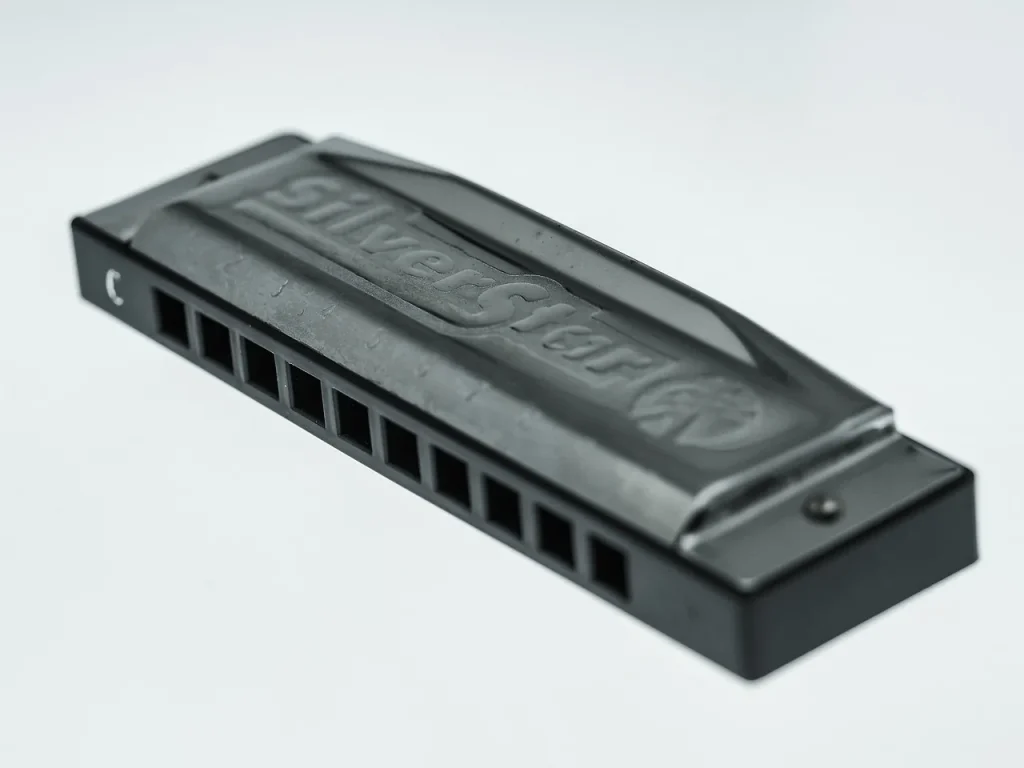
Guide objective: help you choose a reliable instrument for getting started in France without spending a fortune. This guide covers simple, comfortable 10-hole diatonic harmonicas that are easy to play.
A word about the instrument: compact and intuitive, it offers immediate enjoyment. Invented in 1821 and mass-produced by Hohner from 1857, it remains central to blues, folk and country music.
We compare established brands: Hohner, Suzuki, Lee Oskar (Tombo), Swan and Seydel. The best value for
money is often between €30 and €50. Online retailers such as Amazon and Thomann often deliver within 48 hours, offer savings of around 15% and allow returns within 30 days.
The rest of the guide compares models, explains how to choose one and outlines the differences between diatonic and chromatic harmonicas, along with practical tips for making quick progress.
Why start playing the harmonica in France today?
A compact instrument makes it easy to play music every day. Affordable and portable, the harmonica became a fixture of blues and folk in the 20th century, played by Sonny Terry, the Beatles and the Rolling Stones.
Getting started is quick: the mouthpiece is intuitive, breathing feels natural and you can play your first tunes within a few weeks. This accessibility suits all levels and encourages regular practice.
Low initial cost: the first purchase is modest, and maintenance is limited. Over time, annual expenses are much lower than for a piano or guitar.
Worldwide production illustrates growing interest: Hohner went from 650 units in 1857 to more than 3 million in 2023.
- Widely available in France from specialist shops and major platforms with short delivery times.
- Portable: it fits in a pocket, making it ideal for practising anywhere.
- Plenty of learning resources: online lessons, apps and tutorials in French.
Within a few weeks, you can play simple tunes and join local jam sessions. It is a rewarding way to begin learning a new instrument.
Best budget harmonicas for beginners
To try the instrument with little financial risk, here are five options that are easy to find in France.
Swan 10-hole (C) — a very inexpensive option (around €9.90). Lightweight (around 85 g), it has 0.9 mm reeds. Its clear sound makes it suitable for a first try without a major investment.
Hohner Special 20 — the best balance (around €40.90). Its airtight plastic comb provides good air sealing and comfort. Ideal for making quick progress.
Lee Oskar Major Diatonic — modular design (around €40). Replaceable reeds, simple maintenance and durability make it a sound medium-term investment.
Suzuki Folkmaster — tuning accuracy and ergonomics (around €32.99). Its stable ABS comb and reliable tuning (±2 cents) make it a good choice for ear training.
Hohner Blues Band — light and easy to handle (around €27.90). Weighing about 80 g, it suits children and people in their first weeks of practice.
All five are 10-hole diatonic harmonicas compatible with most tutorials. They are available online in France, often with delivery within 48 hours. For your first harmonica, choose the key of C: it works with the widest range of teaching materials and makes it easier to resell or upgrade your instrument.
How to choose an inexpensive diatonic harmonica
Before buying, check the key, material and number of holes. These three factors affect your progress more than appearance does.
Key
The key of C is favoured by 87% of beginners for its versatility and compatibility with most teaching methods.
B-flat (Bb) has a rounder sound and can make learning bends easier. Choose C to follow most tutorials, or B-flat if you prefer a softer tone.
Materials, reed plates and reeds
Modern plastic or ABS combs offer airtightness and comfort. Wood gives a warm sound but requires more care. Aluminium is strong and precise.
Brass or steel reeds determine responsiveness and durability. Well-fitted reed plates improve airtightness and airflow efficiency.
10 holes or 12 holes
A 10-hole instrument is enough for blues, rock and folk. A 12-hole instrument provides a wider range, useful for jazz or more varied solos.
| Criterion | Recommended option | Why |
|---|---|---|
| Key | C or B-flat (Bb) | C: compatible with tutorials (87%); B-flat: rounder sound, easier bends |
| Comb | Plastic or ABS | Airtightness, low maintenance and comfort |
| Reeds & plates | Brass or steel, with aligned plates | Responsiveness, durability and better airflow efficiency |
| Number of holes | 10 holes | Enough for most styles; 12 holes provide a wider range |
Practical tip: choose a key first (C or B-flat), then a comb, and start with 10 holes for straightforward learning. Read verified online reviews and compare airtightness and reed response before buying. For a simple buying guide, see our recommended selection.
Diatonic or chromatic harmonica: differences and uses

Technical features and maintenance
A chromatic harmonica has a slide that gives mechanical access to every note. It weighs around 210 g on average, compared with about 130 g for a diatonic model.
The result: maintenance is more involved. Parts and reeds generally cost 30–40% more. The slide needs regular cleaning to prevent it from sticking.
Styles and uses
Diatonic harmonicas remain the standard for blues, rock and folk. They are simple, light and responsive.
The chromatic harmonica is better suited to jazz and classical music, allowing complete melodic phrases and greater precision.
Practical advice
Start with a 10-hole diatonic instrument, then explore chromatic harmonicas as your musical needs develop. Try a chromatic model in a shop to feel its weight, the click of its slide and its response. Choosing according to your repertoire and budget makes playing more enjoyable.
C or B-flat for beginners: what do professionals say?
The choice of key directly affects how easy bends are to play and the character of the sound.
Why B-flat (Bb) can help with bends: teachers note a more forgiving reed response and a gentler attack. This can make bends and overblows easier to develop and less frustrating.
C remains the most common key in lessons, backing tracks and teaching methods. It simplifies reading chord charts and transposing notes for students using online resources.
Depending on the style, B-flat is often favoured in jazz, blues and rock for its warmth. C offers a neutral sound that works with most tutorials and backing tracks.
Practical advice: choose C if lessons and readily available resources matter most. If easier bends and a rounder sound are your priorities, consider B-flat.
“Many professionals use B-flat for its musicality, then add C for compatibility with lessons.”
Ideally, owning both keys (C and B-flat) will cover more situations. Start with one, build a solid foundation, then add the other.
Affordable brands worth considering for beginners
Several brands stand out for reliability and availability in France. Their ranges span very inexpensive models and more durable instruments.
Hohner
Tradition and choice: making harmonicas since 1857, Hohner offers the Marine Band, Blues Harp and Hohner Special 20, often recommended as a model for developing players.
Suzuki
Founded in 1953, Suzuki focuses on durability and carefully fitted parts. The Folkmaster is precise and accessible; the HA-20 has more refined finishes.
Lee Oskar (Tombo)
Modular design: the Tombo system uses interchangeable parts. Ideal if you want easy maintenance and access to replacement reeds.
Swan
A very inexpensive option (around €9.90). Widely available online and useful for trying the instrument with little financial risk.
Seydel
German quality: the stainless-steel Session Steel offers comfort, durability and rounded covers that suit lips and beards.
Tip: consider local availability and after-sales service first, followed by comfort in the mouth. For a selection of reliable instruments, see our complete guide here.
A closer look at the Hohner Special 20: airtightness and playing comfort
The Hohner Special 20 often strikes an ideal balance between comfort and performance. It costs around €40.90 and combines an airtight plastic comb with stainless-steel covers and brass reed plates.
Airtightness makes notes easier to produce and reduces breathing fatigue. You need less effort to get a full sound, and the response is more consistent across the range.
The plastic comb feels smooth on the lips and stays stable over time. It needs less maintenance than wood and helps the instrument stay in tune longer.
The reeds and brass plates provide a consistent response and stable tuning. This supports precision and helps when learning bends.
- Versatility: blues, rock and folk — one model covers most needs.
- Covers without sharp edges: comfortable during long sessions.
- Easy to find in C and B-flat (Bb): a simpler first choice.
- Strong Hohner distribution network in France and available parts.
Practical tip: start with a Special 20 in C, then add a B-flat as you progress. This model is often used as a reference in lessons and tutorials.
A closer look at the Lee Oskar Major Diatonic: reliability and spare parts
The Lee Oskar Major Diatonic features a patented modular system designed to last. It costs around €40 and offers a good balance between frequent use and easy maintenance.

The plates and reeds can be replaced quickly without replacing the whole instrument. That can save money for people who play regularly.
Playing feels lively: quick response, strong projection and easy bends. Consistent tuning from one instrument to the next is a notable strength of Tombo, the Japanese manufacturer.
- Maintenance: good for learning basic disassembly and extending the instrument’s life.
- Uses: blues, rock and folk — works well in C and other keys.
- Availability: parts and accessories are available from specialist retailers in France.
| Strength | Benefit | Why |
|---|---|---|
| Modular design | Long-term savings | Replace plates and reeds without buying a new instrument |
| Projection | Audible alongside accompaniment | Robust construction and lively response |
| Consistency | Reliable performance from one instrument to the next | Tombo manufacturing and quality control |
Conclusion: this Lee Oskar is a good option for regular players. It combines practicality, sound quality and room to grow, making it a lasting investment.
A closer look at the Suzuki Folkmaster: accuracy at a modest price
The Folkmaster’s accurate tuning makes it a serious choice for people who want to train their ears. This Suzuki model costs around €32.99 and is reportedly tuned to within ±2 cents.
Its ergonomic design includes comfortable covers, a good grip and a smooth feel against the lips. It lets you play without irritation and practise for longer.
The ABS comb stays dimensionally stable and resists moisture. Maintenance is simple, and the tuning remains reliable after repeated sessions.
Its tone is clear and precise, ideal for melodies and practising bends. Active since 1953, the brand has a strong reputation for consistent manufacturing.
- Value for money: a price just under €35 is unusual for this level of tuning accuracy.
- Available in C and other keys so you can gradually expand your collection.
- A useful step toward higher-performance instruments.
Tip: start with this model in C, then try a B-flat to practise bends. The Folkmaster suits players who want accurate tuning on a limited budget.
Two inexpensive options: Hohner Blues Band and Swan
Two other options let you test your interest in playing with little financial risk.
Hohner Blues Band — priced around €27.90 and weighing about 80 g, this is a Hohner entry-level model. Light and easy to handle, it suits small hands and beginners.
Swan — the very inexpensive option (around €9.90). With 0.9 mm reeds and a weight of about 85 g, this model lets you try the instrument without a large investment. It is widely available in C from online sellers.
Possible uses: a first instrument as a gift, school workshops or a trial before buying a sturdier model.
- Strengths: low cost, quick availability and easy returns if it does not suit you.
- Limitations: less airtight and precise than instruments costing €30–€50, but enough for learning the basics of maintenance.
- Style: simple sounds suited to basic blues and folk and your first well-known riffs.
Practical tip: stick with the key of C to make use of teaching resources. After a few weeks, consider moving to a Special 20, Folkmaster or Lee Oskar.

Where to buy in France: online retailers or shops
Where you buy affects the experience as much as the instrument you choose. Compare service, warranty and total cost before completing your purchase.
Online: Amazon, Thomann, Woodbrass — prices, returns and delivery
Advantages: average savings of 15%, delivery often within 48 hours and returns within 30 days.
Platforms offer a wide choice of brands and keys. Watch for extra charges: around €3 for insurance and €7 for express delivery.
Physical shops: trying instruments, advice and warranties
In a shop, you can assess the mouthpiece and how comfortable the instrument feels in your hand. Personal advice can help you choose the right key.
Stock may be more limited, and availability varies by city. Buying locally makes exchanges and direct access to warranty support easier if a problem arises.
Promotional periods: Hohner sales and flash deals
Hohner often offers substantial discounts in January (up to 25% on Marine Band and Special 20 models) and June (15–20% on Blues Harp and Lee Oskar models).
Set price alerts and watch for flash deals on Amazon and Thomann.
- Check authenticity: serial numbers and package seals.
- Look for free returns and exchanges if tuning or airtightness is defective.
- Consider identifying a model in a shop, then buying it online if the offer is better.
| Channel | Main advantage | Drawback |
|---|---|---|
| Online | Wide choice, average savings of 15% and fast delivery | Possible extra charges and risk of counterfeits |
| Shop | Try it in person, get advice and access a local warranty | Limited stock and sometimes higher prices |
| Combined approach | Explore in a shop and purchase online | Requires attention to returns and authenticity |
Practical example: read recent reviews of the key you want, and consider beginner bundles with a case and cloth if you want a complete kit.
How much to budget: from a first try to a reliable instrument
A considered budget makes learning easier and helps you avoid reselling an instrument soon after buying it. Here is how to choose according to your needs and how often you practise.
Very small budget: €20 maximum
Goal: try playing without a major commitment.
Example: a Swan at around €9.90. This entry-level model offers an inexpensive first try. Expect compromises in airtightness and tuning accuracy.
Best balance: €30–€50
Best balance of quality and room to progress: Hohner Special 20 (around €40.90), Lee Oskar (around €40) or Suzuki Folkmaster (around €32.99).
These instruments offer better comfort, responsive reeds and stable tuning. They make learning easier and reduce frustration.
Next level: €60–€80
Comfort and finish: models such as the Suzuki HA-20 (around €78) offer better airtightness and tuning stability.
Spending a little more may prevent another purchase soon and improve everyday playing.
- Longevity: good maintenance can extend an instrument’s life by two to five years, sometimes longer.
- Accessories: allow €10–€25 for a case and maintenance kit.
- Tip: watch for promotions to move up a range without paying more.
Practical tip: if possible, start in the €30–€50 range; move to €60–€80 if you play often or want greater consistency.
Useful accessories for beginners and instrument protection
Good accessories extend an instrument’s life and make it easier to play while travelling.
Cases and protection: choose a rigid EVA case or a light neoprene sleeve (around 50 g). EVA absorbs around 87% of impacts, while an IP54 rating provides protection against dust and splashes.
Kits and maintenance: a basic kit (soft brush, microfibre cloth, suitable screwdriver and gentle cleaning solution) costs around €12–€15 and can substantially extend a harmonica’s life.
Microphone holders and small tools
Choose a holder compatible with the SM57 that supports at least 500 g and has fine-adjustment screws. Cardioid microphone setups reduce feedback during amplified rehearsals.
| Accessory | Benefit | Practical advice |
|---|---|---|
| EVA case | Shock absorption (around 87%) | Ideal for transport and storage |
| Neoprene sleeve | Lightweight (around 50 g) | Useful for a pocket or for carrying several cases |
| Cleaning kit | Simple maintenance | Costs €12–€15 and includes a brush and cloth |
| Microphone holder | Stability on stage | SM57 compatibility and fine-adjustment screws |
Good habits: choose a case with several compartments if you carry multiple keys, keep a small breathable bag so the instrument can dry before storage, and retain spare covers and screws when available.
These protective items cost little compared with replacement parts. To round out your supplies, you can buy a complete kit.
Maintenance and cleaning: extending the life of reeds and plates
Careful cleaning helps prevent corrosion and preserves reed response. Adopt a simple routine after each session to maintain a good sound and avoid surprises.

Routine after each session
Gently shake the instrument to remove excess moisture. If its comb permits rinsing, use lukewarm water, then wipe it with a soft cloth.
To disinfect without damaging metal or plastic, use a mild solution of one part white vinegar to two parts water.
Periodic disassembly
Do this after about 20 hours of playing, or more often if you play in humid conditions.
- Undo the screws with a suitable screwdriver.
- Separate the plates and arrange the screws in order.
- Clean the reeds and plates with a soft brush.
- Leave them to dry for 24 hours in a ventilated place.
- Reassemble the instrument, checking alignment to preserve airtightness and reed response.
Avoid: alcohol above 40%, abrasive products and fully immersing wooden combs, which could warp.
| Action | Why | Frequency |
|---|---|---|
| Light rinse | Removes saliva and residue | After each session |
| Disassembly and brushing | Cleans reeds & plates | About every 20 hours of playing |
| Drying for 24 hours | Prevents corrosion and swelling | Before reassembly |
Tip: a maintenance kit costing less than €15 may double the instrument’s life over several years. Test the notes after reassembly and photograph the disassembly to make future maintenance easier.
Myths about inexpensive harmonicas: fact or fiction?
People often say entry-level models are not up to the task, but the reality is more nuanced.
Durability: modern materials make a difference. Plastic (ABS) combs resist moisture better than wood. Even inexpensive models may have 0.9 mm brass reeds. In tests, a Swan (around €9.90) may provide around 1,500 hours of playing, compared with around 2,000 hours for some Hohner models. The difference is modest for amateur use.
Origin and quality control
60% of instruments in the world are made in China, often for established brands. The real difference lies in manufacturing controls, rather than the country of origin alone. Return rates are similar across ranges (around 2.1%).
| Criterion | Swan | Hohner | Note |
|---|---|---|---|
| Average lifespan (hours) | About 1,500 | About 2,000 | Modest difference for amateur use |
| Comb | ABS | ABS or wood | ABS: better stability |
| Quality control | Standard | Enhanced | Varies by brand |
Verdict: a higher price brings comfort, consistency and better finishing. Longevity, however, depends largely on care and quality checks. Check serial numbers and packaging, then test the instrument. Ultimately, practice and enjoyment matter more than the country of manufacture.
Conclusion
Conclusion — this short guide sums up the essentials for starting out in France.
For a first purchase, choose a 10-hole diatonic in C to match lessons, or B-flat if bends are your priority. Aim for €30–€50 for the best balance of quality and room to progress.
Reliable choices include the Hohner Special 20, Lee Oskar Major Diatonic and Suzuki Folkmaster; very inexpensive options include the Swan and Hohner Blues Band.
Key criteria: airtightness, tuning accuracy, comfort, key, materials, and the quality of reeds and plates. Buying online in France may save around 15% and provide 30-day returns. Maintain your instrument regularly.
Explore your musical styles, practise often and gradually expand your range of keys. Get started and enjoy playing.