
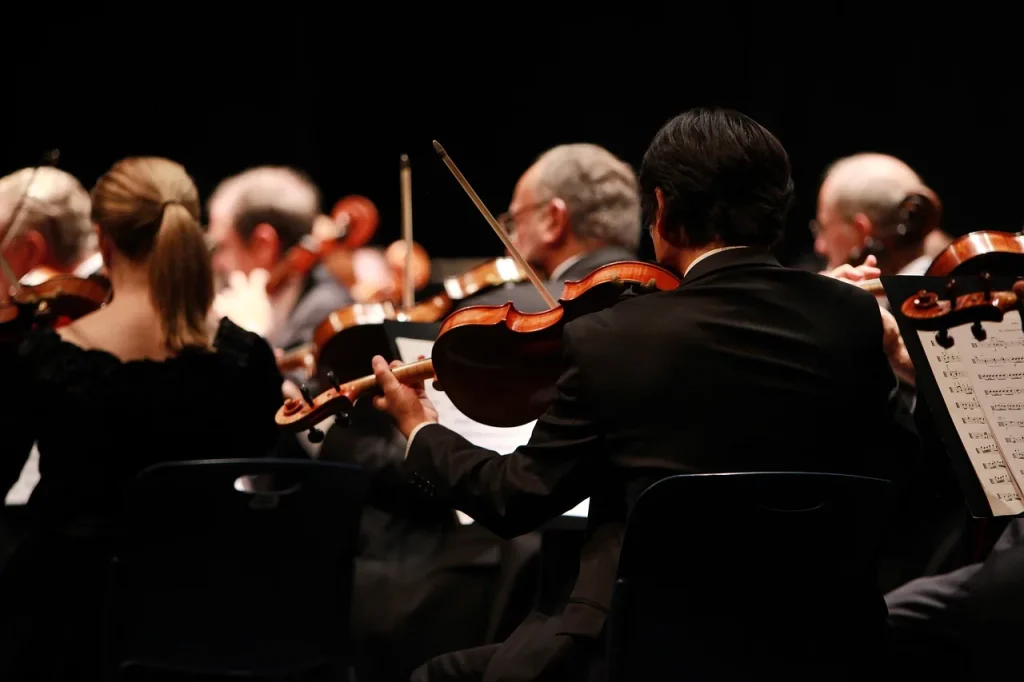
Composition of the symphony orchestra
The symphony orchestra consists of four instrument families: strings, woodwinds, brass, and percussion. Each family plays a specific role within the orchestra.
Bowed string instruments, such as violins, violas, cellos, and double basses, provide melodies, harmonies, and rhythmic foundations. They are often considered the backbone of the orchestra, forming its musical structure and the basis of its sound.
Wind instruments are divided into woodwinds (flutes, oboes, clarinets, and bassoons) and brass (horns, trumpets, trombones, and tubas). They add color and nuance to the orchestra’s sound. The woodwinds bring softness and lightness, while the brass brings power and brilliance.
“The woodwinds bring softness and lightness, while the brass brings power and brilliance.”
Percussion provides the necessary rhythm and accents. It adds energy and texture to the music of the symphony orchestra. Timpani, cymbals, the triangle, and other percussion instruments can be used to create specific effects and dramatic moments.
Distribution of instruments in the symphony orchestra
Here is an approximate breakdown of the instruments in a symphony orchestra:
| Instrument family | Examples of instruments |
|---|---|
| Strings | Violins, violas, cellos, double basses |
| Winds (woodwinds) | Flutes, oboes, clarinets, bassoons |
| Winds (brass) | Horns, trumpets, trombones, tubas |
| Percussion | Timpani, cymbals, triangle |
Roles of the instruments in the symphony orchestra
Each instrumental section of the symphony orchestra plays a specific role and contributes to the richness and variety of the ensemble’s sound. Bowed strings, such as violins, violas, cellos, and double basses, occupy a central place in the orchestra. They play the main melodic parts and provide rhythmic and harmonic foundations. The beauty and warmth of the strings add an expressive and emotional dimension to orchestral performances.
Woodwind instruments, such as flutes, oboes, clarinets, and bassoons, bring vivid colors and melodic solos to the ensemble. They are often used to evoke characters or landscapes in orchestral compositions. Woodwinds can produce a wide range of sounds, from soft, delicate tones to livelier, more dynamic accents.
Brass instruments, such as trumpets, trombones, and horns, bring powerful accents and stirring harmonies to the symphony orchestra. They are often used to heighten dramatic and majestic moments in the music. The powerful, brilliant sound of the brass creates a sense of breadth and grandeur.
Percussion instruments, such as timpani, cymbals, and drums, play an essential role in the orchestra’s rhythm and sound effects. They mark the pulse and add accents to create greater energy and dynamic contrast. Percussion is also used to create special effects, such as thunder or bells, adding a theatrical dimension to orchestral performances.
Roles of the instruments in the symphony orchestra:
| Section | Roles |
|---|---|
| Bowed strings | Play the main melodies, harmonies, and rhythmic foundations |
| Woodwinds | Add color and melodic solos |
| Brass | Provide powerful accents and harmonies |
| Percussion | Provide rhythm and sound effects |
These instruments and sections complement one another to create a rich, balanced range of sounds. Every musician in the symphony orchestra plays an essential role and contributes to the ensemble’s harmony and expression. Each score is carefully orchestrated to highlight the potential of every instrument and create musical works of great beauty and depth.
Conducting the orchestra
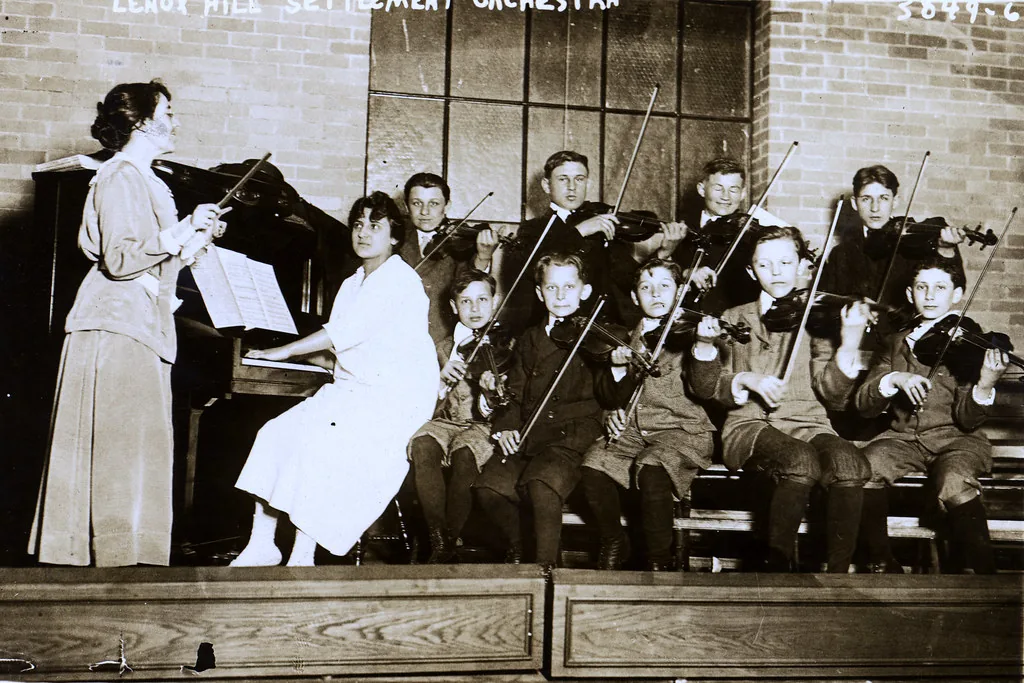
Conducting the symphony orchestra is an essential task performed by the conductor. The conductor coordinates all the musicians and the orchestra’s various sections. They play a central role in interpreting the work and creating a cohesive performance.
The conductor gives cues for tempo and expression, enabling the musicians to play together in a synchronized and coherent way. They connect the musicians with the musical work, conveying their own interpretation while respecting the composer’s vision. They lead the orchestra during rehearsals, concerts, and recordings, helping to ensure the quality and cohesion of the performance.
The conductor needs a thorough knowledge of the score, conducting techniques, and musical dynamics. They must also communicate effectively to convey their intentions to the musicians and maintain a constructive, inspiring working atmosphere. Their ability to lead and inspire the musicians is essential to achieving performances of a high standard.
The role of the conductor:
- Coordinate the orchestra’s different sections
- Give cues for tempo and expression
- Lead the ensemble during rehearsals and performances
- Interpret the work while respecting the composer’s vision
- Maintain the quality and cohesion of the performance
- Convey their intentions to the musicians clearly and precisely
- Communicate effectively and inspire the musicians
- Ensure a performance of a high standard
Conducting an orchestra is an art in itself, requiring both technical skill and artistic sensitivity. The conductor leads the musicians and translates the composer’s intentions into a captivating musical experience. Their presence and personal interpretation make them central to creating a masterful orchestral performance.
References:
“Orchestral conducting: a difficult but rewarding art” — Le Monde, 2019
“The Art of Conducting” — John Doe, 2018
Sociology of the symphony orchestra
Besides being a complex musical ensemble, the symphony orchestra also reflects society. The sociology of the orchestra highlights social differences among musicians according to the instruments they play. Musicians who play string instruments, such as violins, often come from more affluent backgrounds, while wind players who come from municipal bands have more varied backgrounds.
These socioeconomic differences are also reflected in musicians’ pay. Principal woodwind players, who perform a greater proportion of solos, tend to be paid more than members of the string section. Nevertheless, every musician is indispensable to the orchestra and contributes to creating something greater that transcends social background and differences in pay.
“The symphony orchestra is considered a metaphor for society, in which every musician is indispensable and must know when to step back so that something greater can come to life.”
As a musical ensemble, the symphony orchestra brings musicians and audiences together. It provides a space where musicians from different social backgrounds unite to create harmony. The symphony orchestra thus embodies the idea of an ideal society, where diverse talents and experiences combine to form something greater than the sum of their parts.
The sociology of the symphony orchestra sheds light on the social and economic aspects of this musical ensemble, but the music transcends these differences and brings people together in a shared experience. The symphony orchestra demonstrates music’s ability to unite people and create collective beauty.
Table:
| Instruments | Social background | Pay |
|---|---|---|
| Strings | More affluent | Lower |
| Woodwinds | More varied | Higher |
Conclusion
The symphony orchestra is a complex and fascinating musical ensemble. Made up of different instrument families, it offers a distinctive richness of sound and an endless range of expression. Each instrumental section plays a specific role and contributes to the orchestra’s overall harmony.
The size and composition of the orchestra can vary according to the needs of the work being performed and the economic context. The conductor, however, always plays an essential role in leading and interpreting the ensemble.
Reflecting society, the symphony orchestra brings together musicians from different backgrounds and provides a meeting place for artists and audiences. It is a space where music comes to life, captivating and delighting listeners.
FAQ
What instruments are in a symphony orchestra?
The instruments of the symphony orchestra are grouped into four families: strings, woodwinds, brass, and percussion.
What is the role of string instruments in the symphony orchestra?
Bowed string instruments, such as violins, violas, cellos, and double basses, provide melodies, harmonies, and rhythmic foundations.
What is the role of wind instruments in the symphony orchestra?
Wind instruments, divided into woodwinds (flutes, oboes, clarinets, bassoons) and brass (horns, trumpets, trombones, tubas), add color and nuance to the orchestra’s sound.
What is the role of percussion in the symphony orchestra?
Percussion provides the rhythm and accents needed by the symphony orchestra.
What is the role of the conductor?
The conductor coordinates the different sections, gives cues for tempo and expression, and leads the ensemble during rehearsals and performances.
What does the sociology of the symphony orchestra examine?
String players generally come from more affluent social backgrounds than wind players. The woodwind section has a greater proportion of principal players than the string section, which affects their respective pay.
What does the symphony orchestra represent?
The symphony orchestra both reflects society and brings musicians and audiences together.