
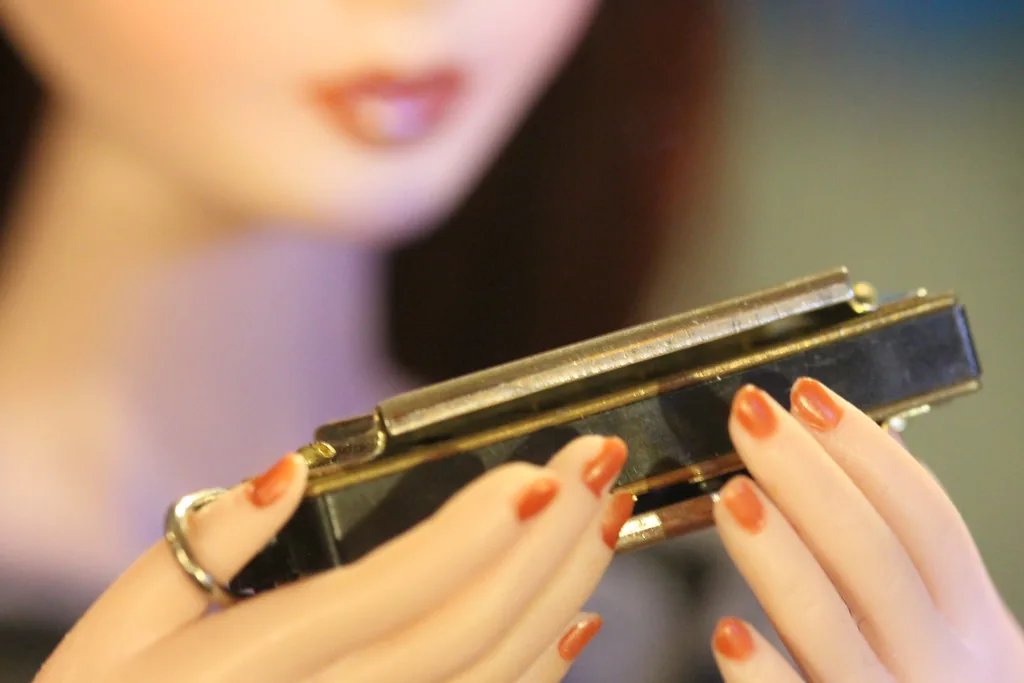
In brief: The harmonica known as the tremolo is a double-reed diatonic instrument with two rows of reeds. Each note comes from two reeds tuned slightly apart, creating a lively beat that sets the instrument apart on stage.
This guide explains how it works, its tuning systems (Richter and non-Richter), and how to choose models such as the Hohner Echo 55/80 and Tombo Band Deluxe 1521. It also offers practical advice for the stage, dances and sessions.
Traditional Québécois playing, shaped by Henri Lacroix, La Bolduc and Louis Blanchette, still influences players today. The usual keys are D, G, A, C and F for playing with a fiddle or melodeon.
Core technique: tongue-blocking is essential for a clear sound, steady flow and built-in rhythmic accompaniment. We will see why bending remains limited and how to work around those limits.
Aim: to provide a complete guide with concrete examples, practical advice on models and temperaments, and pointers for building a strong repertoire.
What is a tremolo harmonica, and what does it sound like?
The wavering sound of a tremolo is easy to recognize: two rows of reeds play the same note but are tuned slightly apart. Each hole brings together two stacked openings that produce a pair of notes close in frequency. The difference between them creates the characteristic beating effect.
Its sound is bright, full and almost choral. This type of instrument projects better in an ensemble than a 10-hole diatonic, which has a more direct sound and is easier to bend.
- Comparison: an octave harmonica layers the same note an octave apart for a fuller, less wavering sound.
- Tuning example: on a Tombo 1521, the same hole might produce C at 446 Hz and C′ at 443 Hz; that difference determines the speed of the beat.
“For a distinctive tone, choose a model with a deliberately wider tuning difference.”
Limitations: paired reeds make deep bends less flexible. In traditional music, the tremolo remains ideal for dance tunes and rhythmic accompaniment. Look for models whose tuning difference gives you the tone you want.
Under the covers: reeds, airflow and the tremolo beat
Let us look closely at how two reeds playing the same note create this distinctive halo.
Two reeds per note
For each hole, two reeds vibrate together. They produce the same note, but one is slightly higher than the other.
The beat
This small difference creates periodic interference heard as a natural vibrato. The speed of the beat depends on the difference between the reeds. A few cents are enough to speed up or slow down the pulse.
Acoustic effects and the role of air
Layering the reeds increases brightness and enriches the sound spectrum. The “halo” adds power and helps the sound carry on stage.
A broad column of air activates both reeds, stabilizes the note and limits distortion when you play loudly.
- A clear attack and steady sustain.
- Small irregularities are masked, an advantage for dance music.
- Paired reeds make deep bends harder.
| Feature | Echo 55/80 | Tombo 1521 |
|---|---|---|
| Type | Traditional double-sided model | Non-Richter, 21 holes |
| Use | Musette sound, good projection | Complete scales, versatility |
| Character | Can have a pronounced beat | Controlled beat, more neutral |
The beat is the signature of the two-reed mechanism.
Tremolo tuning systems: Richter and non-Richter
Tuning systems determine the tone and range of usable notes on a double-row instrument. The chosen layout affects which notes are available, especially in the low register.
Why Richter tuning leaves gaps
Richter tuning was designed for the 10-hole harmonica: it favors draw chords and bends. On a tremolo, this tuning leaves gaps in the low scale, such as the absence of draw F and A on a C instrument. Players are therefore often pushed toward the middle and high registers.
Why non-Richter helps melodic playing
Non-Richter tuning distributes the notes regularly. Scales rise without gaps from the first holes. This makes transitions smoother and ornaments easier to play.
Model examples and practical consequences
In practice, the Hohner Echo 55/80 (Richter, double-sided in C/G) retains a vintage sound suited to certain repertoires. The Tombo 1521 (non-Richter, 21 holes) remains a benchmark for melodic continuity.
| Feature | Hohner Echo 55/80 | Tombo 1521 |
|---|---|---|
| Type | Richter, double-sided | Non-Richter, 21 holes |
| Use | Vintage sound, chords | Continuous melody |
| Consequence | Gaps in the low register, pronounced high register | Even ascent, easier ornaments |
Richter feels natural to people used to a 10-hole harmonica; non-Richter is often preferred for continuous melodic playing.
Tremolo harmonica: how it works, uses and repertoire
On records from the 1920s to the 1940s, the tremolo’s wavering sound often dominates dance tunes.
In traditional music, it serves as both soloist and rhythmic support. Reels, 6/8 tunes and waltzes form the heart of the repertoire. The instrument appears on recordings by Henri Lacroix, Louis Blanchette and Mary Travers, and later by Gabriel Labbé.
There are two main approaches: a singing style with gentle beating, and more percussive playing built on tongue-blocking and tongue-lifted chords.
To play with a fiddle or melodeon, prioritize D, G, A, C and F. For example, joining a session in D calls for either an instrument in D or a “reverse” approach on a C instrument, depending on the tune list.
On stage, it fills the space and blends well with guitar or piano. To learn, starting with a non-Richter model helps you master scales; you can then explore historical pieces on Richter models for their tone.
Timbre matters as much as interpretation: articulation, accents and phrasing bring the dance to life.
Can you bend notes on a tremolo?
Bending a note on a tremolo has clear technical limits. A precise bend requires control of air flow and pressure on a single reed. On a two-reed instrument, that control becomes unstable.
Physical limits of bending two reeds
Two reeds vibrating at once respond differently to an attempted bend. The result is often indistinct and uneven.
When and why to avoid bending
You can isolate one reed to lower a note, but the volume drops and the tone becomes nasal. In dance music, this disrupts the flow and fast playing.
- Practical consequence: aiming at just one opening makes fast playing harder.
- Solutions: switch to an instrument in another key, play “in reverse,” or use a chromatic harmonica.
- Rule of thumb: if two notes out of three need bending, it is better to change instruments.
Prioritize accurate pitch and stability: expressiveness comes from articulation, octaves and chords rather than forced bends.
| Problem | Consequence | Solution |
|---|---|---|
| Bending two reeds | Unstable, indistinct | Avoid it or choose another instrument |
| Bending a single reed | Loss of volume, nasal tone | Use sparingly in short phrases |
| Repertoire requiring bends | Distorted melodic lines | Chromatic harmonica or one in another key |
Playing in several keys on one tremolo
By reversing the roles of blow and draw notes, you can often reach G or F on a C harmonica.
Principle: depending on how blow and draw notes are arranged, some neighboring keys become playable without changing instruments. This depends on how the scale degrees are divided between blowing and drawing.
For example, tunes in G or F may work “in reverse” on a C model. Many Irish polkas gain energy this way.
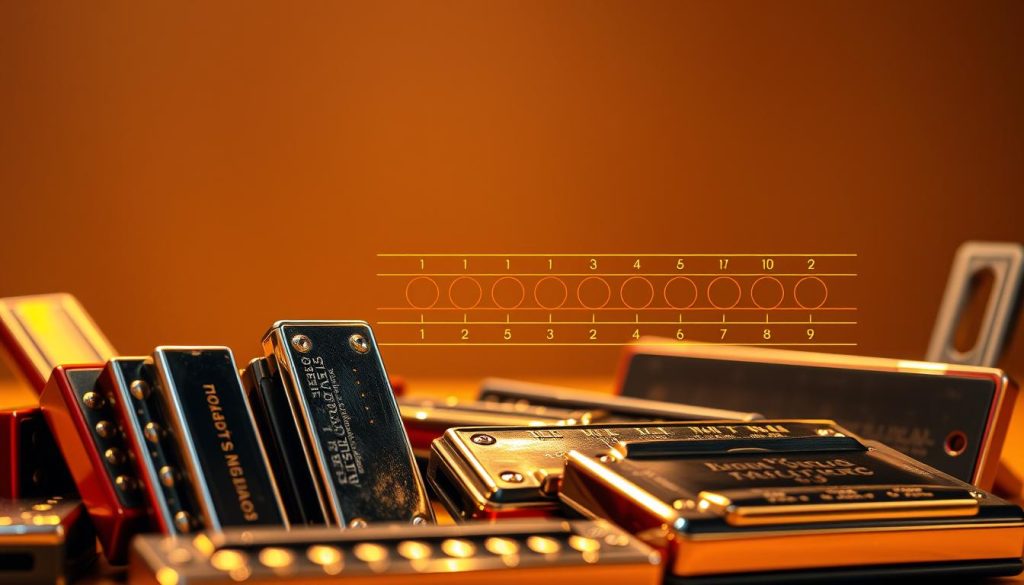
Musical benefit: in the reverse position, entire phrases line up with one direction of airflow. This gives a clearer attack, a stronger pulse and ornaments that are easier to connect.
For fiddle sessions, prioritize D, G and A in your small collection of instruments. This makes group playing easier and reduces instrument changes.
- Limits: not every melody fits; test key passages to check that the required notes are available.
- Method: identify the blow notes available in each target key and find easy rhythmic accents.
- Progression: start with G on a C harmonica, then explore F; try short tunes before expanding your repertoire.
“If the high register becomes too shrill, change instruments rather than forcing a key.”
Chromatic or diatonic tremolo for traditional music
Choosing between chromatic and diatonic instruments directly affects the character of traditional tunes.
How to choose: for a full, bright sound, the diatonic tremolo remains a standard choice; for agile semitone playing and certain ornaments, the chromatic has the advantage.
Québécois and Irish music
In Québécois music, the diatonic allows octaves and tongue-lifted chords reminiscent of the melodeon. It encourages warm, percussive playing.
In Irish music, the chromatic slide makes grace notes and rolls easier. This technique speeds up articulation in reels and jigs.
When the slide becomes an advantage
A well-adjusted chromatic produces clean semitones. For example, changing a C/C-sharp layout to C/B by reversing the plates makes some fingerings smoother.
- Chromatic model: precise semitones.
- Non-Richter type: continuous scales and a grounded pulse.
- Tip: keep a diatonic for its sound and a chromatic for pieces with frequent key changes.
Choose the instrument that best serves the ornaments and playing style you want on stage.
Useful tunings and temperaments in traditional music
The choice of tuning directly affects tone and compatibility with other instruments.
Equal temperament and “just” tuning:
Equal temperament favors versatility. Chords remain compatible with an equally tempered piano and guitar.
“Just” tuning gives warmer thirds. This creates a more welcoming tone in solo playing, but can cause clashes in a modern ensemble.
The effect of tuning on an instrument with paired reeds:
Layering slightly detuned reeds changes how intervals blend. Controlled detuning determines the speed of the beat and the breadth of the sound’s halo.
Sensitive notes: thirds and B need attention. A slight drift may enrich a modal melody but clash with a tempered accordion.
Standard C/C-sharp chromatic and the C/B variant
A standard chromatic pairs a C reed plate with a C-sharp plate, and the slide raises notes by a semitone. It is easy to find and maintain.
The C/B variant, used by players such as Eddie Clarke, involves reversing the slide or swapping plates between instruments. This makes some fingerings easier and balances airflow better on row-based tunes.
“Controlled detuning becomes a sonic signature: choose it to suit your style and fellow musicians.”
| Criterion | Equal temperament | “Just” tuning |
|---|---|---|
| Compatibility in a group | Very good | Moderate |
| Warmth of chords | Neutral | Warmer |
| Practical use | Mixed sessions with fiddle and accordion | Solos, modal pieces |
Practical advice: record your trials to check the beat speed. Note each adjustment so you can reproduce the same style on several instruments. In D, G and A, aim for consistent tuning to play with fiddle and accordion without harmonic clashes.
Essential techniques: tongue-blocking, octaves and chord playing
Good tongue movement makes the sound more precise and richer. The technique of tongue-blocking means covering several holes with your lips and blocking some with your tongue so only the target hole sounds.
Its benefits include a fuller sound, precise control of air and less distortion than with a puckered embouchure. This approach is essential on a paired-reed model.
Quick exercise: point the tip of your tongue slightly to the left; its right side blocks the holes. Keep the tongue in contact and lift it only to create octaves or chords.
To produce octaves, lift and replace the tongue so that two separated holes sound. This adds power and harmonic richness.
In a waltz, lifting the tongue on beats 2 and 3 creates a “oom-cha-cha” accompaniment. The tongue also becomes an internal metronome that helps shape attacks and brief silences.
“Work on tongue precision first; musicality will follow.”
| Aspect | Effect | Exercise |
|---|---|---|
| Tongue-blocking | Clear sound, controlled airflow | Maintain contact and isolate one hole |
| Octaves | Harmonic power | Lift the tongue to sound two separated holes |
| Accompaniment | Rhythmic pulse | Lift the tongue on beats 2 and 3 of a waltz |
Breath control and articulation for reels, 6/8 tunes and waltzes
Steady breathing is the foundation of precise, danceable playing. Abdominal breathing should guide every phrase: keep the diaphragm active and shoulders still, with a hand on your abdomen to feel it contract.
Airflow control: play economically with your breath. It is better to split a quarter note into an eighth note followed by a rest than to force the airflow. Dynamics come from rhythmic placement and accents rather than force.
Practical tips:
- Find moments to breathe: replace a quarter note with an eighth note followed by a rest in a fast 6/8 tune.
- Breathe in and out through your nose to balance blow and draw notes discreetly.
- Double a note at the octave or play a chord on the strong beat to release or take in air without breaking the pulse.
Even airflow helps maintain accurate pitch when tongue-blocking: the tongue stabilizes notes and phrasing. Adapt your breathing to the style: in a waltz, breathe on offbeats; in a reel, take regular short breaths.
Controlled breathing protects the reeds and helps prevent premature detuning.

| Goal | Action | Effect |
|---|---|---|
| Stable phrases | Controlled abdominal breathing | Even notes, greater endurance |
| Using less air | Split notes and use rests | Longer phrases without strain |
| Discreet breaths | Double at the octave or play a chord on the strong beat | Breathe without interrupting the rhythm |
Holding the harmonica and using your hands on tremolo and chromatic models
How you hold the instrument and position your hands directly shapes its tone and resonance. The usual rule is low notes on the left, with cupped hands forming a cavity. On a 10-hole harmonica, this resonating chamber amplifies the low notes.
On longer models, move the cavity as the melody travels along the instrument. This keeps the volume and tone even from one end to the other.
With a chromatic: free your thumb to operate the slide. This limits some “wah” effects; the right hand must stay mobile to mark accents.
In both low and high registers, adjust the cavity opening to maintain the same tone. Try high, central and low hand positions.
- Adapt your grip to your tongue-blocking technique: maintain a good seal at the sides without restricting the tongue.
- On a double-sided model, most hand effects are limited; work on embouchure and articulation.
- Comfort: a relaxed but stable grip reduces fatigue and refines note attacks.
Some musicians play with one hand, as Terry Sullivan does, which helps with fast trills. Finally, spend five minutes a day exploring hand openings on the same phrase to broaden your tonal palette.
For more on choosing a model and adjusting it, consult a practical guide to choosing a model.
Harmonica and traditional Québécois music
After arriving in the late nineteenth century, the instrument quickly found a place at the heart of Québec dances.
Its spread was helped by early 78 rpm records featuring musicians such as Henri Lacroix, Louis Blanchette and Mary Travers. They became models for later generations.
The revival of the 1970s and 1980s, led by Gabriel Labbé and groups such as La Bottine Souriante, modernized arrangements. The result was a denser sound that made room for fiddle, melodeon, guitar and piano.

History, spread and accompanying instruments
The instrument blends with the fiddle’s bowing phrases and the melodeon’s chords. It strengthens the harmonies without covering the voice or fiddle.
Foot tapping, turlutte and rhythmic treatment
Call-and-response songs, turlutte singing and foot tapping are among the genre’s hallmarks. Reels, 6/8 tunes and waltzes dominate the repertoire.
The rhythm emphasizes accents that support dancing. Musicians shape the swing through articulation, foot percussion and tongue-lifted chords.
“Compare older and newer recordings to better understand how the playing and sound have evolved.”
| Period | Key figures | Musical role |
|---|---|---|
| Late nineteenth and early twentieth centuries | Henri Lacroix, Louis Blanchette, Mary Travers | Spread through dances, accompanying fiddle and melodeon |
| 1970s and 1980s | Gabriel Labbé, La Bottine Souriante, Le Rêve du Diable | Revival and modernized arrangements |
| Today | Many contemporary musicians | A living, blended practice on stage and in archives |
To explore further, read a chapter of the book devoted to traditional Québécois music. Comparing old and recent recordings sharpens your ear for the style of this music.
Signature repertoire: reels, 6/8 tunes, waltzes and tricky pieces
Older dance repertoire is full of pieces suited to the double-row instrument, from lively reels to lyrical waltzes.
Classics to practise
Short list: Reel des noces, Money Musk and Grande gigue simple. These tunes bear the stamp of Québécois recordings and provide reference points for articulation and rhythmic accents.
Adaptations and practical examples
To phrase a jig on the tremolo, use octaves and tongue accents to reinforce the pulse. For example, double the main melody at the octave in the refrain and keep a discreet “oom-cha-cha” on the weaker beats of a waltz.
Fiddle and duo playing
Matching your attacks to the fiddle bow makes unison playing easier. Try passages in thirds or sixths: the timbre often complements the fiddle without masking its dynamics.
Reverse playing and ornaments
Playing “in reverse” lets you play some tunes in another key on the same instrument and gain energy.
Ornaments: adapt grace notes and rolls with brief tongue articulations and precise changes of breath. On a chromatic, these ornaments sound clearer; on a tremolo, they add warmth and rhythmic grounding.
Listen to historical versions to identify regional nuances and guide your rhythmic placement.
Recommended brands, models and keys
Choosing a model depends as much on the sound you want as on the keys you need.
Tombo Band Deluxe 1521 and modern alternatives
The Tombo 1521 (non-Richter, 21 holes) offers smooth melodic playing. It makes complete scales easier on stage and in recordings.
Suzuki offers reliable alternatives with consistent finishing and stable response, useful if you want to buy several without unwelcome surprises.
Echo 55/80, Marine Band Echo and other classics
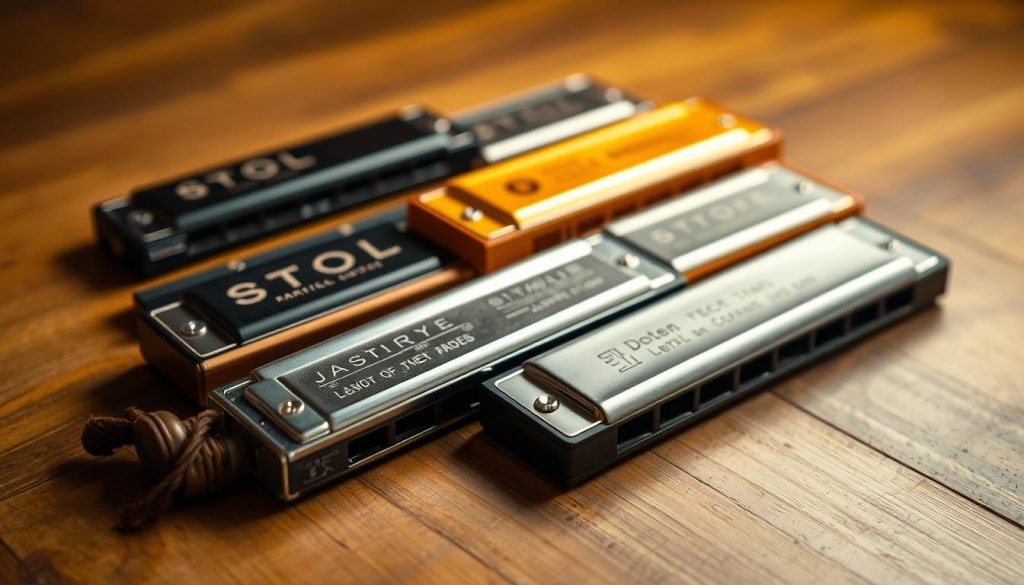
The Hohner Echo 55/80 retains the vintage character sought by some musicians. The Marine Band Echo and Tremolo Sextet remain heritage models with strongly distinctive tones.
Practical advice and recommended sets of keys
One compact set is D, G and A for sessions with fiddle and melodeon. Add C and F to broaden your range.
- For very melodic, fast playing: favor non-Richter models such as the Tombo.
- For a historical tone: choose the Echo 55/80 or Marine Band Echo.
Tip: try several examples of the same model and check their tuning before buying. Attend to the screws and air seal from the first use.
Maintenance, retuning and minor adjustments
A few simple steps and regular maintenance help prevent problems. Frequent checks protect the stability of the beat, which depends on the tuning difference between two reeds.
Reed stability, moisture and preventing breakage
Moisten the instrument naturally with your tongue so the covers stay slippery. Playing with economical airflow reduces excess pressure and helps prevent cracked reeds.
After an impact, check promptly for leaks; quick action helps prevent sound irregularities from affecting other holes.
Targeted adjustments, swapping plates and changing keys
Fine retuning by filing a few cents restores the beat speed. This is a delicate technique, however, and beginners should leave it to a workshop.
Practical tip: to adapt a C/B chromatic, swapping plates between instruments of the same series is often safer and easier to reverse than filing.
- Routine: light cleaning, checking screws and checking the beat in each register.
- Common problems: a reed cracked by excess pressure, detuning after an impact.
- Sensitive notes, such as thirds, need special attention if you play with an equally tempered keyboard.
Write down the tuning difference you want so you can recreate your sonic “signature” during future adjustments.
| Problem | Action | Result |
|---|---|---|
| Impact or detuning | Check screws and the beat | Stability restored |
| Cracked reed | Replace the reed plate | Volume restored |
| Need another key | Swap plates | Reversible adaptation |
In conclusion, regular care extends the life of your instruments, keeps your harmonicas consistent as a set and makes performances more dependable. This observation applies to all situations in session playing.
Conclusion
: choosing an instrument, a tuning and a technique serves one purpose: supporting the dance and melody. Favor a non-Richter model such as the Tombo 1521 for an even melodic ascent, while appreciating the tone of historical models such as the Hohner Echo.
Technique: practise tongue-blocking, octaves and small tongue-lifted chords. On this double-reed instrument, sounding several holes gives more power than playing one alone.
Abdominal breathing and accent placement structure reels, 6/8 tunes and waltzes. For pieces requiring many bends, switch to a well-tuned chromatic.
Simple maintenance: monitor the difference between paired notes, take care of the reeds and clean the instrument regularly. For historical context, read the short history of the instrument in traditional Québécois music.
Next steps: assemble a set of harmonicas in D, G, A, C and F; record your adjustments; and work through representative tunes. Your playing will gain consistency, expression and dance momentum.