

This guide offers clear, practical advice to help you choose a country harmonica today.
Often called a pocket piano, the harmonica remains one of the most expressive instruments for country phrasing. It combines portability, an accessible price and the ability to produce many effects.
Here you will find an introduction to playing positions, a comparison of diatonic and chromatic harmonicas, advice on choosing keys and recommendations for different budgets.
We emphasize the importance of setup: airtightness, fine tuning and reed response shape the singing sound you want.
The 2025 approach favors efficient learning: a good instrument, useful adjustments and digital tools to help you improve quickly.
By the end, you will know which keys to buy first, which models suit your budget and which improvements to pursue for a convincing sound.
Why a dedicated country harmonica buying guide matters in 2025
With so many options in 2025, a clear guide is essential for making your purchase and saving time.
Beginners need forgiving, responsive instruments. Look for models without sharp edges, with a smooth feel against the lips and a moderate thickness. A poor choice slows your progress.
Common mistakes are easy to avoid: trusting the advertised style, overlooking ergonomics or choosing an instrument that is too demanding. These pitfalls drain energy and motivation.
This guide compares several options objectively, gives realistic price ranges and presents practical criteria for your choice. A good start means less time struggling with the instrument and more time making music.
Modern tools such as Jamzone and backing tracks can also speed up learning. Our goal is to help you find a reliable harmonica that will continue to suit your needs as you improve.
Country harmonica sound: understanding playing positions
Playing positions often define a song’s character, from bright folk melodies to biting phrases.
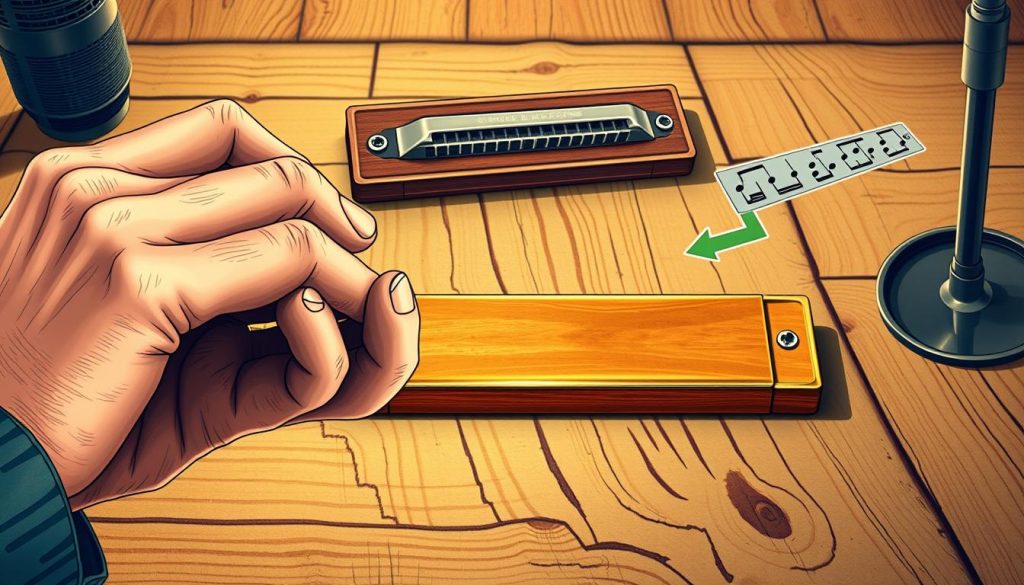
First position (straight harp)
Definition: you play in the harmonica’s labeled key, mainly using blow notes. This produces a bright, steady folk sound.
For example, on a C diatonic harmonica, the C major scale falls naturally in first position. This position favors simple melodies and accompaniment with blow chords.
Second position (cross harp)
Definition: you play a fifth above the harmonica’s labeled key, mainly using draw notes.
For example, a C harmonica can be played in G in second position, using a Mixolydian scale. Its edge is close to blues and rock, especially when the third draw note is bent by a whole step.
“Start in first position to steady your breath and intonation, then add second position to expand your expressive range.”
The position markings at the ends of Lee Oskar harmonicas help you switch quickly between first and second position, which is useful in rehearsal. In practice, work slowly with a metronome on blow and draw patterns, then focus on anchor notes to make your bends reliable.
Diatonic or chromatic for country: what are the practical differences?
Choosing between diatonic and chromatic changes your musical approach considerably. The decision affects your sound, technique and the equipment you carry.
Diatonic harmonica: simplicity and expression
The diatonic harmonica is light, affordable and responsive. It allows bends, vibrato and attacks that suit roots phrasing.
Each instrument is built around one key, so players commonly carry several harmonicas to play in different keys.
Chromatic harmonica: versatility and trade-offs
Chromatic harmonicas provide access to every note through a slide. They suit jazz and classical music.
They are heavier, more complicated to maintain and generally more expensive.
“A well-set-up diatonic remains a practical choice for roots music; a chromatic shines when you need every note.”
| Criterion | Diatonic | Chromatic |
|---|---|---|
| Expressiveness | Bends, warbles and a gritty sound | Fewer organic effects |
| Keys | One labeled key per instrument | Access to every note through a slide |
| Price and maintenance | Affordable and easy to maintain | More expensive and demanding |
| Ergonomics | Light and suited to playing with both hands and the mouth | Bulkier and heavier |
One notable example is the Hohner Chromonica 270, a benchmark among chromatic harmonicas. For your first instrument, choose a well-tuned diatonic with responsive reeds and consult the best beginner harmonica guide.
Which key should you choose to start playing country?
The right key makes bends easier to learn and helps you produce a more expressive sound. It affects your tone, comfort and rate of progress.
Starting in C or B-flat: the advantages
B-flat offers a gentler response and a warm tone, ideal for roots phrasing. Bends may feel less abrupt.
Many professionals prefer B-flat because it helps them gain control over delicate bends. In practice, it works well in many situations and provides a rounded solo sound.
C remains the standard teaching key. Learning resources are plentiful, and first- and second-position patterns are easy to follow.
Working on the intonation of blow and draw notes is more straightforward in C, helping you understand how the positions relate to the tuning.
Why own several harmonicas?
To play with a band and follow a singer, you may need several keys. After buying your first instrument, gradually build a set in C, B-flat, A, D and G.
These cover most keys you will encounter on stage and at jam sessions. If your needs are limited, transposition tools such as Jamzone can save you time before you buy more instruments.
- Practical tip: stabilize the third draw note in second position on one harmonica, then transfer what you have learned to nearby keys.
- Consider the tone: B-flat and A sound rounder; C and D sound brighter.
“Choose C for easy-to-follow learning materials; choose B-flat for more comfortable bends and a warm sound.”
In short, adapt your choice to your repertoire. If you are a beginner, try C to learn the basics or B-flat if you want a mellower sound. Plan to buy other keys according to the time you have and the situations in which you play.
Recommended models for different budgets
Choosing an instrument that fits your budget speeds up progress and helps you avoid unnecessary purchases.
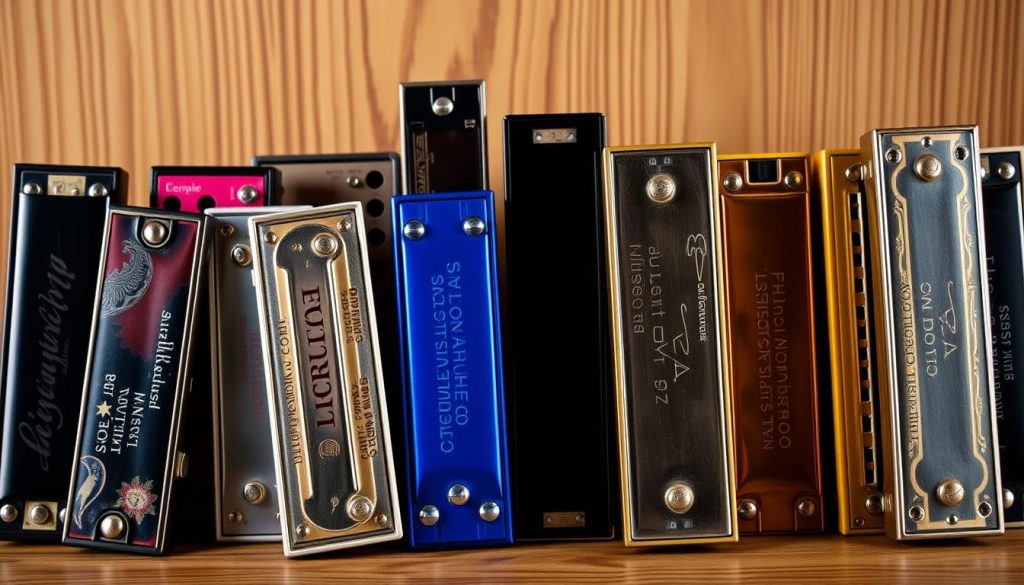
Entry level (around €39)
Hohner Golden Melody: rounded edges, a comfortable grip and a gentle tone for melodic playing.
Hohner Special 20: an airtight plastic comb and forgiving response for beginners.
Lee Oskar Major Diatonic: a clear sound, available replacement parts and popularity on stage.
For €10 more: a modern option
The Hohner Rocket Progressive builds on the Special 20 concept with greater projection and response. It is worth considering if you can spend a little more.
Midrange (around €78)
Suzuki Hammond HA-20: careful finishing, metal covers and comb, and a full tone. It offers good value as you improve.
Premium instruments and customization
An optimized HA-20, with fine tuning, tone adjustments and reed setup, can become a high-performance instrument. The greater investment reduces effort and improves note stability.
“Better reed response reduces fatigue and improves control over dynamics.”
| Range | Examples | Strengths | Indicative budget |
|---|---|---|---|
| Entry level | Golden Melody, Special 20, Lee Oskar | Comfort, replacement parts, forgiving response | Around €39 |
| Intermediate | Rocket Progressive | Greater projection and response | Around €49 |
| Midrange | Suzuki Hammond HA-20 | Finish, stability and rich tone | Around €78 |
| Optimized | Modified HA-20 | Fine tuning and adjusted reed plates | Variable; more expensive |
Practical advice: for good value, choose one well-prepared midrange model over several entry-level instruments with little setup work. To learn more about choosing a diatonic instrument, see our diatonic harmonica guide.
A closer look at Hohner: Marine Band, Special 20 and Chromonica
To understand the practical differences, let’s compare three established Hohner models. These instruments cover needs on stage and in the studio while remaining easy to try in a shop.
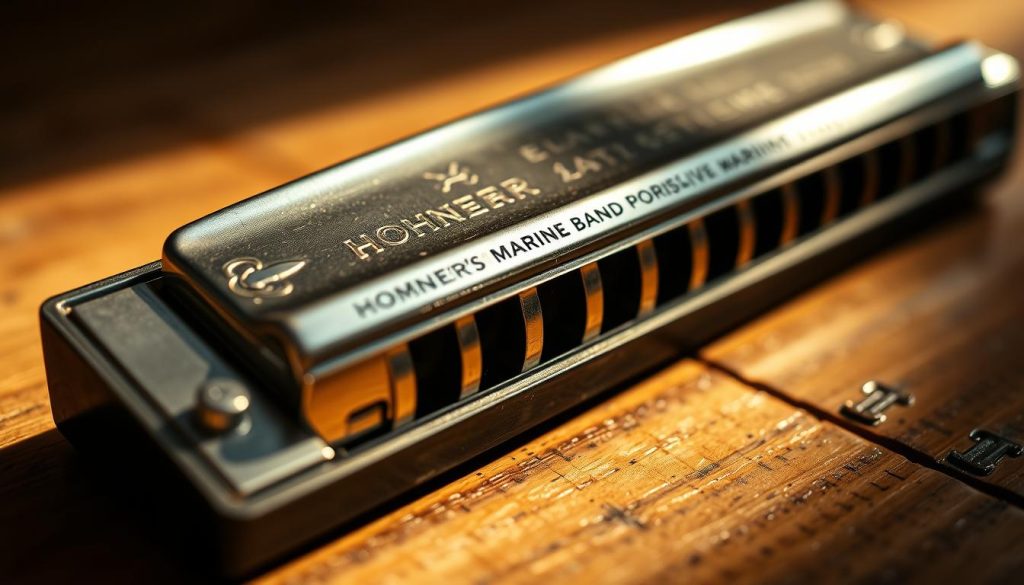
Marine Band
The Marine Band represents a tradition more than a century old. Its pearwood comb offers an organic feel and a full sound, both highly valued in blues and country.
Pay attention to its longevity: the wood needs care and particular protection from moisture. Good maintenance preserves its performance and vintage character.
Special 20
The Hohner Special 20 has a plastic comb that provides good airtightness. Its reeds respond readily, making bends and subtle changes in expression easier.
This model remains an excellent choice for beginners. Its comfortable mouthpiece, smooth covers and forgiving response make learning easier.
Chromonica 270
The Chromonica 270 is a benchmark among chromatic harmonicas. It has 48 reeds across three octaves and a smooth slide mechanism.
Its precision and accordion-like tone shine in jazz and classical music. It is less suited to effects typical of roots playing, however.
“Try each instrument if you can: how it feels in your mouth often tells you more than a description.”
To build a consistent set that covers common keys on stage, consider sticking with one Hohner series. For first steps and practical advice, see our beginner’s guide.
A closer look at Lee Oskar: Major Diatonic and position markings
The Lee Oskar Major Diatonic has become a standard stage instrument. It combines a clear sound with modular construction.
The markings at its ends make it easy to switch quickly between first and second position. That is valuable on stage and in rehearsal.
Why this model helps you learn
Its modular design makes maintenance easier: the reed plates and covers can be replaced. This extends its life and lowers its overall cost.
It has a clear playing feel. The attack is precise, and its articulation suits second-position patterns. In first position, the major scale sounds bright.
- Test key notes, including the bent third draw and draw notes on holes 4 through 6, to check the response.
- A set of Lee Oskar harmonicas in several keys supports steady progress.
- Some players find its sound less gritty for heavy blues, but it remains ideal for ballads and modern styles.
| Strength | Description | Benefit |
|---|---|---|
| Position markings | First- and second-position markings at the ends | Saves time on stage |
| Modular design | Replaceable parts | Easier maintenance |
| Response | Clear attack and precise articulation | Suitable for melodies and patterns |
“A sound choice for players who want clear position markings and clean playing.”
A closer look at Suzuki: Hammond HA-20 and customization options
The Suzuki Hammond HA-20 stands out for its all-metal construction. With metal covers and comb, a weight of about 90 g and careful finishing, it offers a smooth feel and dependable performance on stage.
The HA-20’s character
This model favors precision and stability. The metal reduces unwanted vibrations and gives it a pleasing heft in the hand.
Possible improvements
Fine-tuning, adjusting the tone and setting the reeds can improve airtightness and dynamics.
- Better tuning for accurate bends.
- Optimized reed gaps and airtightness for greater response.
- Tone adjustments for controlled sustain.
In playing, these changes mean clear attacks on the third draw note, smooth second-position transitions and control over sustain for modern country phrasing.
“Customization costs extra, but gives motivated players considerable room to grow.”
By comparison, entry-level models with plastic combs remain economical. The standard HA-20 already performs well, and customization brings it closer to a bespoke harmonica.
Materials and ergonomics: comb, covers, weight and playing comfort
Your choice of materials affects both comfort and an instrument’s lifespan. Ergonomics shape endurance and precision, especially for beginners.
Plastic, wood or metal comb: how each feels in the hand
A plastic comb brings light weight, around 50 to 60 g, as well as airtightness and stability. It is used in the Golden Melody, Special 20, Rocket Progressive and Lee Oskar.
The Marine Band’s wooden comb offers a traditional feel but needs care to prevent swelling. The HA-20’s metal comb provides durability, a smooth surface and a substantial feel in the hand.
Edges, smoothness and thickness: avoiding fatigue
The shape of the edges and the fit of the covers, reed plates and comb all affect fatigue. A few extra millimeters can strain the jaw.
A slightly heavier instrument may feel steadier in the hand, but avoid gripping it so tightly that you create tension.
| Material | Advantage | Drawback |
|---|---|---|
| Plastic | Light, airtight and stable | Less of a vintage feel |
| Wood | Warm feel and traditional sound | Maintenance and sensitivity to moisture |
| Metal | Durable, smooth and long-lasting | May feel bulkier |
Well-secured reed plates improve airtightness and attack. Wiping the instrument, letting it dry and preventing saliva from sitting inside it will extend its life.
Choose materials that keep you comfortable over the long term instead of chasing a marginal change in sound.
Setup and techniques: getting the notes and country effects you need
Improving airtightness and reed response makes difficult notes easier to reach.
Essential bends and phrases
Key point: the third draw note is crucial in Mixolydian second-position playing. Master its half-step and whole-step bends, then stabilize the bent second draw note.
Technique: practice each bend separately with a metronome, then connect them in I–IV patterns, alternating blow and draw notes.
Reed response and tuning
Good tuning and correctly set reed gaps make bends easier. Responsive reeds require less air and maintain their pitch.
“Air leaks or poorly adjusted reeds make playing harder and blur the pitch.”
- Practice slowly with a metronome to stabilize the pitch of each bent note.
- Record your bends to check their intonation.
- Clean the instrument gently and check its screws to help preserve its tuning.
| Focus | Action | Result |
|---|---|---|
| Third draw | Isolated exercises with a metronome | Stable target pitch |
| Airtightness | Check seals and tighten screws | Less effort and more consistent bends |
| Reed response | Adjust reed gaps and fine-tune | Better dynamics and intonation |
Blues harmonica phrases can be adapted: they enrich your modern vocabulary if you keep control of the target note.
In short, a well-prepared instrument and careful practice save time and give you access to all the notes you need.
Effective practice: tools and resources for improving
Focused practice supported by digital tools turns each minute of training into measurable progress.
Jamzone and transposition
Jamzone lets you transpose any backing track. This makes it easier to practice in first and second position without buying several harmonicas.
The HOHNER SELECT playlist offers varied styles and keys, useful for working on phrases and response in a musical setting.
Backing tracks, metronome and routine
An effective routine: a short warm-up, metronome practice, I–IV–V progressions in second position, then guided improvisation over backing tracks.
- Focus on the third draw note, then stabilize its bends.
- Vary the tempo: slow for control, then moderate and fast to work on airflow.
- Alternate styles such as folk, jazz and pop to develop your ear.
“Short, frequent practice strengthens technique and builds confidence when playing with others.”
Set goals: stable bends at a slow tempo, followed by applying them in other keys with digital transposition. Recording your sessions helps you correct intonation and timing.
Conclusion: digital transposition and a regular practice plan reduce the need to buy more instruments and maximize your music-making time.
Country harmonica: models, setup and tips
A good choice starts with clear criteria: playing styles, target keys and comfort in the hand.
Quick checklist:
- Define your musical styles, whether folk or modern country, and your priority keys, such as C and B-flat.
- Set a budget and consider your experience level to identify the right model.
- Test how it feels: the edges, how smoothly it moves against your lips and its overall thickness, including covers, plates and comb.
- Check airtightness, tuning and reed response: every hole should sound, and no note should respond slowly.
- Choose the material for your needs: plastic for airtightness, wood for a warm feel or metal for durability.
Common mistakes to avoid
Do not sacrifice comfort for appearance. An instrument that is too thick or has sharp edges quickly tires the hand and jaw.
Avoid buying a model without trying it. Check its tuning and plan for regular maintenance.
“A well-chosen, well-maintained model speeds up progress, reduces frustration and extends the instrument’s life.”
To learn how to tune and maintain your instrument properly, see our practical guide to tuning and methods. As you improve, gradually make a list of useful keys and use transposition tools to save time.
Conclusion
Conclusion: this guide is intended to help with both your purchase and your musical progress.
For a roots style, choose well-set-up diatonic harmonicas. Bends give you access to the useful notes and provide an expressive edge. More expensive chromatic harmonicas remain an option for jazz and classical music.
Remember a few leading models: the Marine Band for its traditional wooden comb, the Hohner Special 20 for its airtight plastic comb, the Lee Oskar for its clarity and position markings, and the HA-20 for its finish and customization potential.
Choose thoughtfully according to your musical style, comfort and budget. Start in C or B-flat, use Jamzone to transpose, stabilize the third draw note, look after the tuning and maintain the reed plates regularly.
Make time for practice, listening and maintenance: a well-chosen instrument that is properly cared for will serve you for years.