

Why maintain this instrument? Saliva, dust and food residue build up and affect its sound. Regular maintenance extends the instrument’s life and keeps the reeds responsive.
Two levels of maintenance: quick steps after playing, followed by partial cleaning with warm water and a cotton swab, without touching the reeds. For a complete cleaning, disassemble the covers, reed plates and comb using suitable screwdrivers.
Immediate benefits: more accurate notes, fewer blockages and more reliable reed response. A water and vinegar bath for the plates and covers, or 60–90% alcohol on compatible parts, are established options.
Watch out for common mistakes: touching the reeds, using strong solvents, immersing a wooden comb or reassembling the instrument before it is completely dry. Ultrasonic cleaning is mainly useful as a preliminary step.
If disassembly feels daunting, consider taking lessons with a professional to learn the method step by step.
Why and when to clean your harmonica
Daily use gradually affects sound quality as deposits build up inside. Saliva, dust and residue from the mouth enter the channels and settle around the reeds. Over time, this impairs the sound and makes notes harder to play.
A practical schedule: a quick step after every session helps. Gently tapping the instrument to remove saliva reduces buildup and increases the time between more thorough cleanings.
For routine maintenance, partially clean it with warm water and a cotton swab after a few sessions. This limits deposits between deeper cleanings.
Plan a complete disassembly about once a year, especially if you play often. Some harmonicas are easier to disassemble than others; adjust the frequency to the model and how much you use it.
- Recognize saliva and residue as the main sources of buildup.
- Clean more often after concerts or long rehearsals.
- Prioritize prevention to preserve sound quality.
Before playing: preventive steps that extend the instrument’s life
Before a session, a few simple steps protect the mechanism and sound.

Rinsing your mouth with plain water reduces food residue and sugar that can settle in the channels. Do it just before playing to limit particles in your saliva.
Warm up the instrument and ease into playing
Warm the instrument in your hands for a few moments to prevent condensation on the metal reeds. You can also blow and draw gently at first to bring it up to temperature gradually.
Tap and dry
After playing, gently tap the instrument against your palm to expel saliva. Dry it promptly and leave the case slightly open for a few minutes to let moisture escape.
- You can use a clean pocket as a gently warming space, provided the pocket stays clean.
- Avoid eating or drinking just before playing to reduce sticky deposits.
- Wipe the outside if you sweat heavily to keep moisture from getting in.
These quick steps reduce the need for deep cleaning and make daily care easier, even when you have little time.
Routine partial cleaning of a diatonic harmonica
Quick, regular cleaning is enough to limit deposits from the mouth and preserve accurate pitch.
Cotton swabs and warm water in the holes
Prepare two or three clean cotton swabs and a small bowl of warm water. Gently pass each swab into the holes, moving inward from the edge of the mouthpiece.
Never touch the reeds. Use very little pressure: do not push the swab to the back of a channel, where it could bend a reed or leave fibers behind.
Wiping the covers and outer plates
Tap the instrument against your hand to remove saliva loosened by the warm water. Wipe it immediately with a lint-free cloth.
“A little water and plenty of care: cleaning often is better than soaking the comb.”
| Part | Recommended action | Precaution |
|---|---|---|
| Plastic comb | Brief rinse with cold water | Dry promptly |
| Wooden comb | Light surface cleaning with a cotton swab | Do not immerse |
| Plates and covers | Wipe with a soft cloth | No strong solvents |
- This quick procedure works between sessions, especially after eating.
- Repeating it regularly keeps the instrument working well until a complete disassembly.
Cleaning a harmonica: methods and mistakes to avoid
Before you begin, set up a clean, well-lit work surface.
Safe disassembly
Choose screwdrivers suited to your model so you can remove the covers without damaging the screw heads. Carefully separate the covers, reed plates and comb, then arrange the screws and parts in a logical order for reassembly.
A gentle bath for plates and covers
Prepare a mixture of water and vinegar and soak the plates and covers for about 30 minutes. Rinse with clean water, then dry with a microfiber cloth.
Disinfection and brushing
The plates and some combs can be disinfected with 60–90% alcohol. Keep alcohol away from delicate finishes, and avoid strong solvents.
Cleaning the comb
Use a soft brush: brush wood dry or with minimal moisture, and clean plastic or metal with a little water. Dry immediately to prevent a wooden comb from swelling.
Reassembly and testing
Reassemble the parts in reverse order, check the alignment of the reeds and gently tighten the screws. Test the sound across the full range; if a reed appears bent, take the instrument to a professional or take lessons.

Special methods, sensitive materials and advanced care
Special treatments require care: each component needs a suitable approach.
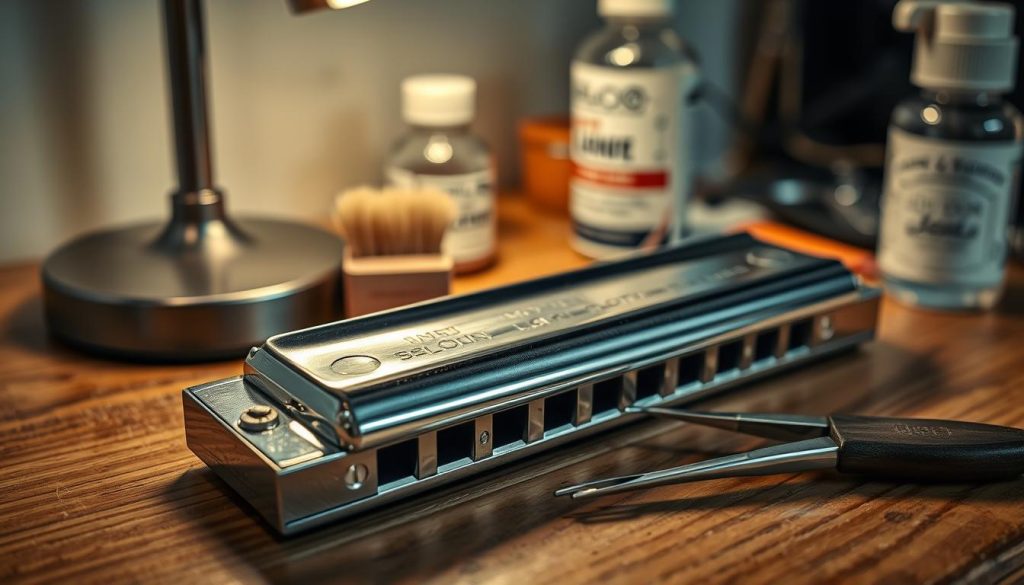
Ultrasonic cleaning: useful but limited preparation
An ultrasonic bath helps loosen deposits. It is still only a preliminary cleaning step. Always follow it with light brushing using a soft brush, then rinse and hand-dry the plates.
Wooden comb: protection from moisture
Wood does not tolerate prolonged exposure to water. Avoid immersing it completely to prevent the comb from swelling or warping.
Dry it promptly with an indirect flow of warm air, and avoid direct heat.
Chromatic harmonica: targeted lubrication
For the slide on chromatic models, apply a small amount of suitable silicone oil. This keeps it moving smoothly without leaving a greasy film.
Products to avoid
Avoid strong solvents and alcoholic drinks. Choose water and gentle products for metal parts. Some harmonicas, such as the Hohner Marine Band, require extra care during disassembly.
“Small, regular and careful maintenance steps protect the instrument better than occasional major interventions.”
| Part | Advanced action | Precaution |
|---|---|---|
| Plates | Ultrasonic cleaning and gentle brushing | Rinse and dry |
| Wooden comb | Limited cleaning and wiping | Do not immerse; dry promptly |
| Chromatic harmonica slide | A small amount of silicone oil | Do not over-oil |
For reliable advice, consult trusted reference sources before taking action. Small maintenance steps done well protect harmonicas and help you care for them safely.
Conclusion
,Keeping the reeds responsive depends on simple, regular habits. To clean a harmonica, combine prevention (rinsing your mouth, warming the instrument and tapping it out), frequent partial cleaning (warm water and a cotton swab) and complete disassembly a few times a year.
Care for wooden combs cautiously; use ultrasonic cleaning as a preliminary step and suitable silicone oil for the slide on chromatic models. Avoid harsh solvents and always dry every part.
Follow advice from trusted reference sources. If needed, take lessons to learn harmonica maintenance and build your confidence. Consider making a personal checklist to stay on schedule.