
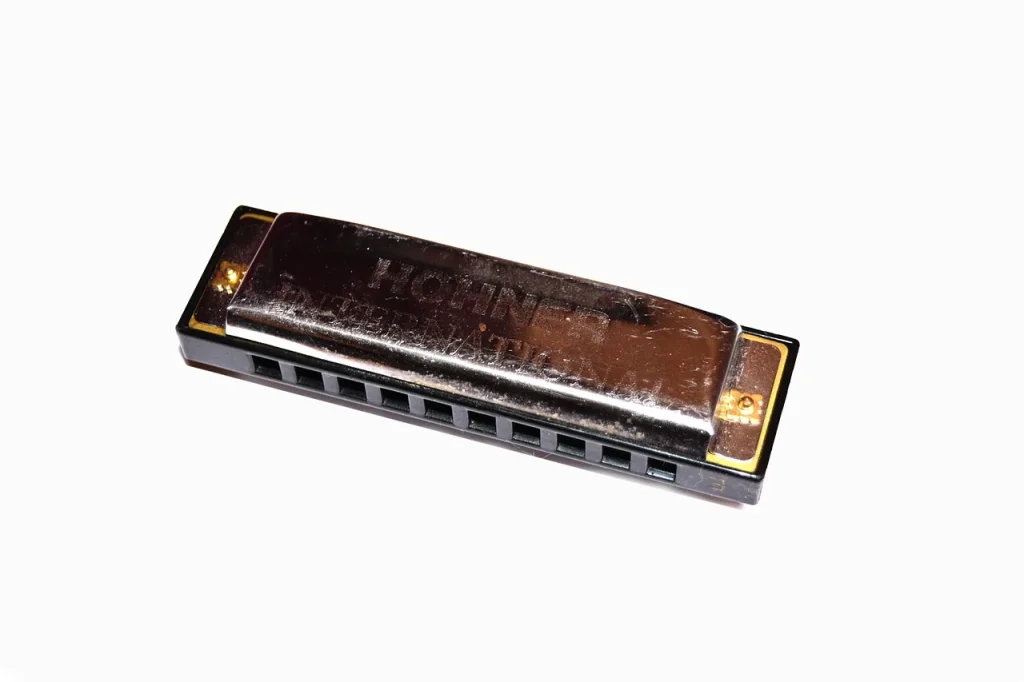
Goal: learn a simplified version of the song step by step on a C diatonic harmonica. This guide explains how to use holes 3 through 6, the basics of reading harmonica tabs, and how to play the chorus at a slow tempo.
What you’ll learn: how to read tabs such as 3 4 -4 5 4 -4 5 4 3 and play the challenging draw notes (-3, -4, -6) with a clean sound.
The guide follows a simple order: background on the song, essential equipment (a C diatonic harmonica and a metronome), how to read tabs, and guided sequences leading up to the final chorus.
Key tips: start at a slow, steady tempo, listen to the melody before playing, and watch your breathing so you do not run out of air during long phrases.
Understand the song and today’s learning goal
This session focuses on the song’s musical character and what you need to master today. We’ll start with its origins to help guide your practice.
Quick background: Ewan MacColl wrote “Dirty Old Town” about an English city where he grew up. Its melody lends itself to a slow, lyrical performance.
Why this approach?
The song’s phrasing is simple and expressive. It works particularly well on holes 3 through 6 of a C diatonic harmonica.
Today’s practical goals
- Play the opening phrases and chorus of “Dirty Old Town” cleanly, focusing on breath control and accurate notes.
- Understand how the tab lines work: each line of lyrics corresponds to a clear sequence (for example, 3 4 -4 5 4 -4 5 4 3).
- Work on sustaining notes and adding light accents instead of playing faster.
Practice plan: learn one phrase at a time, join the sections together, then reinforce everything with the chorus. Stay within holes 3 through 6 and leave advanced bends for later.
Key tip: choose short, regular practice sessions. Your ear will develop, and your breathing stamina will improve more quickly.
Equipment, tuning, and basics for playing Dirty Old Town on a diatonic harmonica
The right instrument and a clear sense of where the holes are will make learning easier.
Choosing an instrument: use a C diatonic harmonica. It matches the tabs shown here and makes it easier to learn holes 3, 4, 5, and 6.

Find holes 3 through 6
Hold the instrument with the low notes on the left and the high notes on the right. Count the holes from the left to find holes 3, 4, 5, and 6.
Tip: keep track of where hole 3 is so you do not confuse -4 with 4 during transitions.
Read the tabs: blow and draw notes
Notation: a number on its own means blow into that hole (for example, 4). A “-” before the number means draw air through it (for example, -4).
Here are two sequences from the melody: 3 4 -4 5 4 -4 5 4 3 and 5 6 -6 6 -6 5 4 5.
- Embouchure: use the “pucker” technique to play one hole at a time.
- Breathing: breathe from your diaphragm, keep the airflow steady, and avoid drawing too hard on -6.
- Starting tempo: 60 to 70 BPM on a metronome.
| Element | Tip | Practical example |
|---|---|---|
| Instrument | C diatonic harmonica | Makes the tabs easier to read |
| Embouchure | “Pucker” technique: aim for one hole | Reduce air leaks |
| Transitions | Take short pauses between -4 and 5 | Avoid sliding between holes |
| Practice loops | Briefly repeat -4 5 4 and 5 -6 6 | Steady your breathing |
Dirty Old Town: Beginner Harmonica Version — Step-by-Step Guide
Follow these slow sequences to memorize the melody and smooth out the transitions. Work one phrase at a time, focusing on how you start and sustain each note.
Phrase 1
I met my love by the gas works wall — 3 4 -4 5 4 -4 5 4 3. Play slowly and practice -4, then 5, on their own. Accent -4 slightly to establish the mood.
Phrase 2
Dreamed a dream by the old canal — 5 6 -6 6 -6 5 4 5. Keep -6 steady with a gentle draw. Repeat the 6 -6 6 loop.
Phrase 3
Kissed a girl by the factory wall — -6 6 5 4 -4 5 4 3. Move down to 3 without sliding, and think of a scale to keep the notes accurate.
Chorus
Dirty old town — 3 4 5 -4 / -4 4 -3 4. Use a lyrical phrasing and sustain -4 by supporting your breath with your diaphragm. Play -3 carefully to avoid air leaks.
- Paint the atmosphere: 4 -4 5 4 5 4 3 / 5 6 -6 6 -6 6 5 / -6 6 5 4 -4 5 4 3.
- Energetic bridge: 3 4 -4 5 4 -4 5 4 3 / 5 6 -6 6 5 -4 4 5 / 6 -6 6 5 4 -4 5 4 3.
- Technical tips: plan your breathing, keep a slow tempo (60 BPM), and articulate -3, -4, and -6 clearly.
Conclusion
Finish the session by bringing together the musical and technical skills you have practiced. You have worked on reading tabs, controlling holes 3 through 6, and making the key transitions (-4↔5, 5↔-6, -6↔6). The chorus melody (3 4 5 -4 / -4 4 -3 4) ties everything together.
Progress in stages: start slowly, raise the tempo by 5 BPM, play first with a metronome, then with a backing track. Listen to well-known versions by The Dubliners and The Pogues to enrich your phrasing.
Recommended routine: spend 10 to 15 minutes a day on -4 5 4 and 5 -6 6. Set specific goals: play a verse without an audible pause and play two choruses in a row with a consistent tone. Accuracy before speed: a clean sound and controlled breathing will bring the melody to life.